
 Made in the Netherlands
 Free product of your choice with orders over €75,-




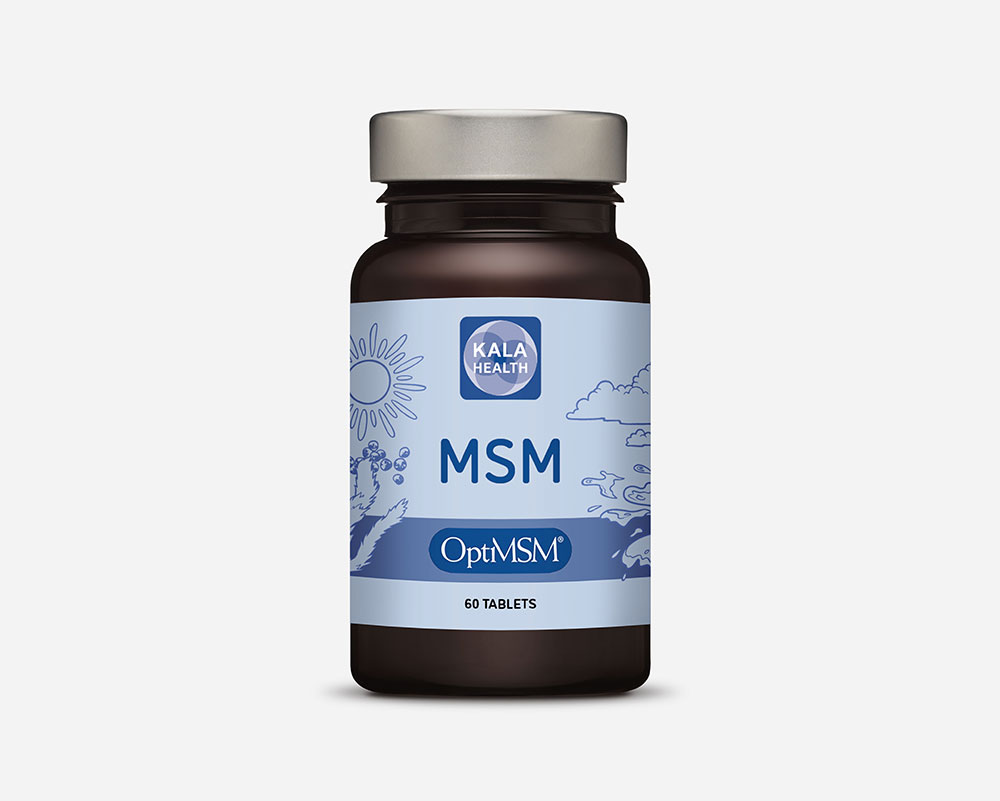
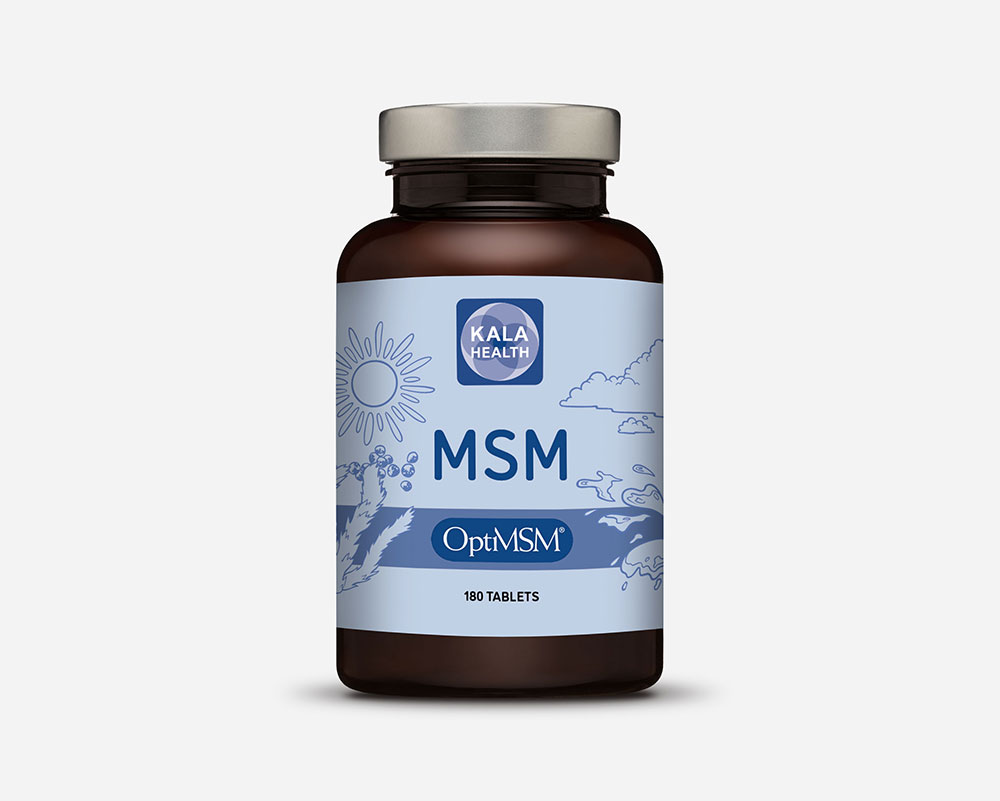

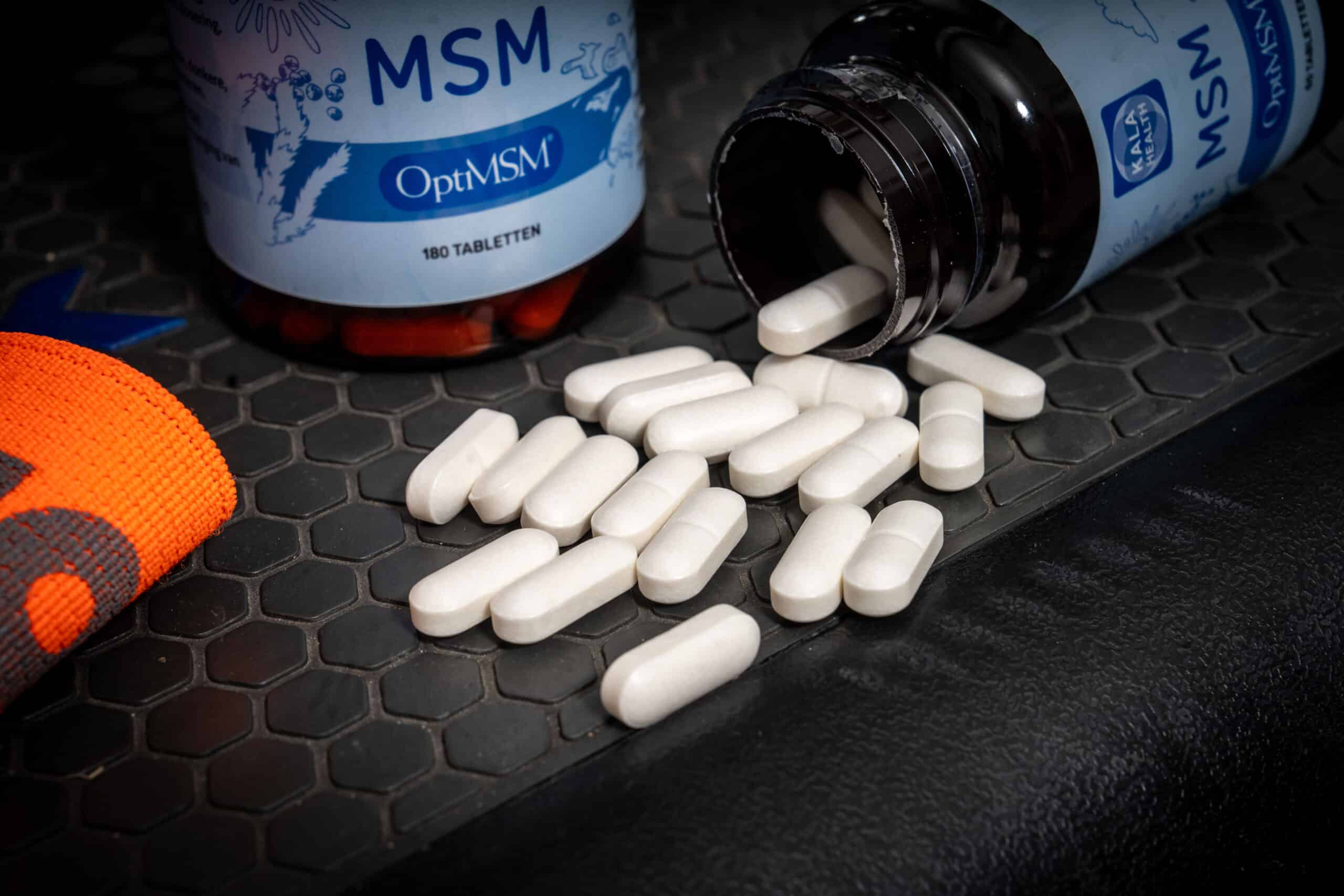
OptiMSM® Tablets
- Quadruple distillation
- Up to 20,000× purer than regular MSM
- 100% OptiMSM® by Balchem (USA)
- Compact tablet, easy to split for flexible dosing



Description
OptiMSM® Tablets 1000 mg
The world’s purest MSM. Purified by quadruple distillation, produced in the Netherlands.
✓ Quadruple distillation ✓ Up to 20,000× purer than regular MSM ✓ 100% OptiMSM® by Balchem (USA) ✓ Compact tablet, easy to split for flexible dosing
What is MSM
Sulphur, the way your body recognises it
MSM (methylsulfonylmethane, CH₃SO₂CH₃) is an organic sulphur compound and one of the primary ways your body receives the sulphur it needs. Sulphur is the third most abundant mineral in the body and an essential component of amino acids, the building blocks of all your proteins. Sulphur is found in connective tissue, cartilage, collagen, and the gut lining.
MSM is a remarkably small molecule (molecular weight of just 94), which makes it exceptionally easy for the body to absorb.
MSM occurs naturally in fruits, vegetables, and fresh milk, but modern food processing, heat, and prolonged storage rapidly degrade its content, leaving concentrations far below what is optimal. This is why supplementation has become a relevant consideration for many people.
What MSM does inside your body
Two mechanisms. No toxic by-products.
MSM works on two levels simultaneously: it provides sulphur for structural building, and methyl groups for biological regulation. When metabolised, MSM releases its sulfonyl group (SO₂) as a source of sulphur, which the body can use in various metabolic processes. No other molecule does both, and neither leaves behind any toxic by-product.
Sulphur: the body’s structural mineral
Most people never think about sulphur. But it is quietly essential to how your body holds itself together and defends itself:
- Sulphur is a component of glutathione, an important endogenous antioxidant
- Sulphur is present in collagen and keratin, the structural proteins found in joints, skin, and hair
- Sulphur is involved in various metabolic pathways, including detoxification pathways in the liver
- Sulphur is a component of the cell membrane, where it is present in certain phospholipids that contribute to membrane structure
Radioactive tracer studies using ³5S-labelled MSM have shown that sulphur from MSM is incorporated into the amino acids methionine and cysteine, into blood serum proteins, and into the collagen and keratin of hair and nails, confirming that the body actively uses MSM-derived sulphur as a building block (Richmond, 1986; Magnuson et al., 2007).
Methyl groups: the body’s regulatory currency
Methyl groups are required for methylation: the process by which the body activates, transforms, and breaks down molecules. Methylation is involved in DNA formation, gene regulation, and the synthesis of various neurotransmitters including serotonin, adrenaline, and noradrenaline.
MSM consists of two methyl groups and one sulfonyl group. When metabolised, precisely those three components are released, nothing more.
When the amino acid methionine is used for its sulphur and methyl group, homocysteine is produced as a metabolic by-product. MSM can help replenish methyl groups and sulphur in this process without itself producing homocysteine. There is no toxic residue the body must process, which is consistent with the finding that MSM can be ingested in large quantities by all life forms studied to date without toxic effects.
Vitamins B6, B9 (folic acid), and B12 are involved in the normal metabolic conversion of homocysteine, and combining MSM with these vitamins is a consideration particularly relevant for those with higher metabolic demands, such as athletes or people following vegetarian and vegan diets.
Who benefits most?
MSM is used by a wide range of people. Those who tend to report the most noticeable benefits include:
- Anyone looking to increase their dietary sulphur intake
- Anyone over 40
- Physically active people
- People with diets lower in fresh, unprocessed food
For specific questions, we recommend reaching out to our specialist, available daily by phone or email.
Why OptiMSM®?
Distillation: the only true purification
All MSM manufacturers must purify their product. The method they choose determines everything.
OptiMSM® uses quadruple distillation. MSM is heated to 238°C. The vapour is captured, cooled, and crystallised. Contaminants with a lower boiling point evaporate before MSM does; heavy metals such as lead (1740°C), cadmium (765°C), arsenic (613°C), mercury (356°C) remain behind due to their far higher boiling points. This process is repeated four times.
Guaranteed purity: up to 20,000 times lower than other MSM
The result is guaranteed heavy metal levels at the extreme lower limit of detection:
Other MSM manufacturers typically guarantee only less than 10–20 ppm heavy metals. OptiMSM® contains up to 20,000 times fewer heavy metals than these products.
All other MSM brands use crystallisation: MSM dissolved in water and dried. Contaminants are not removed; they remain in the crystals. The water used in the process often introduces additional impurities.
OptiMSM® holds three distinctions no other MSM can claim
- The only MSM with GRAS status from the FDA (GRN 000229)
- The only MSM with published, peer-reviewed clinical research (Toguchi et al., 2023)
- The only MSM produced under the worldwide patents of Robert J. Herschler (US4296130A)
An OptiMSM® crystal after purification through quadruple distillation. No traces of contamination are visible.
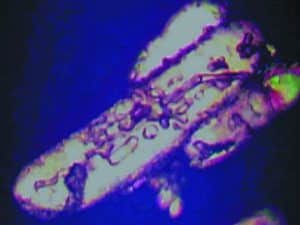
An MSM crystal after the crystallisation method. Clear traces of contamination are visible, including heavy metals.
The tablet
Precision in a compact form
Our OptiMSM® tablets are developed for users who want a clean, precisely dosed, and easy-to-take format. Each tablet is narrow (21 × 8 mm), straightforward to swallow, and designed to split cleanly in two for flexible dosing from 500 mg upwards.
Each tablet contains more than 90% pure OptiMSM®. The remainder is sodium carboxymethylcellulose, a plant-based cellulose that draws moisture from the stomach into the tablet, accelerating disintegration and absorption.
At a glance
- 1000 mg OptiMSM® per tablet — precise, consistent dosing
- Splittable — flexible dosing from 500 mg upwards
- >90% pure — minimal excipients, maximum active ingredient
- Rapid absorption — plant-based cellulose for faster disintegration
- Produced in-house in our FSSC 22000 certified facility in the Netherlands
How to take it
Most research uses between 1,500 mg and 3,000 mg per day, typically split across two doses and taken with food. Some research has looked at combining MSM with vitamin C, as vitamin C is involved in normal collagen formation.
Results vary by individual. Many users begin noticing a difference after 2 to 4 weeks of consistent use, with more significant changes observed around the 6 to 12 week mark. MSM is not a fast-acting compound. It works gradually, as part of the body’s ongoing processes.
Quality assurance
Every batch of OptiMSM® Tablets is produced in our own FSSC 22000 certified facility in the Netherlands, under direct supervision from intake of raw materials through to final packaging.
Paul Klein Breteler, founder of Kala Health and first importer of OptiMSM® to Europe, has been personally involved in the formulation and quality control of every OptiMSM® product since the 1980s, bringing over 40 years of expertise and thousands of customers guided along the way.
Every incoming batch of raw material is independently verified for identity, purity, and absence of contaminants before entering our facility. The complete Product Specification Sheet, laboratory analyses, and certificates are available in the product gallery on this page.
Want to know more?
Our specialists are available daily by phone or email. Free information brochures on the effects and applications of MSM are available on request and included with every order.
The complete OptiMSM® range from Kala Health
| Product | Description | Form |
|---|---|---|
| OptiMSM® Capsules | 1000 mg OptiMSM® per capsule, 100% Flake quality without additives, plant-based HPMC capsule | Capsule |
| OptiMSM® Powder | Pure OptiMSM® powder for flexible dosing, to dissolve in water or fruit juice | Powder |
| OptiMSM® Gel | External gel with OptiMSM® for topical application on the skin | Gel |
| OptiMSM® Powder Peach | OptiMSM® powder with natural peach flavour for those who want to mask the bitter taste | Powder |
| OptiMSM® Powder Matcha | OptiMSM® powder with matcha flavour, combines MSM with the benefits of green tea | Powder |
| OptiMSM® Powder Lemon | OptiMSM® powder with refreshing lemon flavour | Powder |
All variants contain exclusively OptiMSM® from Balchem, purified through quadruple distillation.
Written by Marijn Lewis, PhD
Science Communication & Nutrition Research at Kala Health
Important notice
A dietary supplement is not a substitute for a varied diet. A varied, balanced diet and a healthy lifestyle are important. This product is a dietary supplement (contains MSM).
Safety: Consult a professional before using supplements if you are pregnant, breastfeeding, taking medication or are ill.
Storage advice: Store in a dry place at room temperature, out of reach of small children.
Due to legal restrictions, we may not disclose all details about the possible effects of this dietary supplement. Kala Health has published comprehensive information brochures about MSM that are available free of charge upon request. We will add these brochures to your order upon request.
For content-related questions or personal advice, we are available by phone at: (+31) 070 345 0290. And by email: info@kalahealth.eu.
References
Magnuson, B. A., Appleton, J., & Ames, G. B. (2007). Pharmacokinetics and distribution of [35S]methylsulfonylmethane following oral administration to rats. Journal of Agricultural and Food Chemistry, 55(3), 1033–1038. https://doi.org/10.1021/jf0621469
Richmond, V. L. (1986). Incorporation of methylsulfonylmethane sulfur into guinea pig serum proteins. Life Sciences, 39(3), 263–268. https://doi.org/10.1016/0024-3205(86)90540-0
Toguchi, A., Noguchi, N., Kanno, T., & Yamada, A. (2023). Methylsulfonylmethane Improves Knee Quality of Life in Participants with Mild Knee Pain: A Randomized, Double-Blind, Placebo-Controlled Trial. Nutrients, 15(13), 2995. https://doi.org/10.3390/nu15132995
Composition
Composition & Ingredients
| Ingredient | Per tablet | Per 2 tablets (daily dose) | %RI* |
|---|---|---|---|
| OptiMSM® (methylsulfonylmethane) | 1000 mg | 2000 mg | ** |
*%RI = EU Reference Intake
** No reference intake established
Ingredients: OptiMSM® (99.9% pure methylsulfonylmethane), microcrystalline cellulose, sodium carboxymethyl cellulose, hydroxypropyl cellulose, rice concentrate, rice extract, coating (HPMC).
Allergen information: Contains rice. Free from gluten, lactose, soya and nuts. Suitable for vegetarians and vegans.
NOT added: preservatives, synthetic flavourings, colourings and fragrances.
Use & dosage
Recommended use
Recommended use
| For whom | Daily dosage |
|---|---|
| Adults | 1 to 2 tablets per day |
| Children | Dosage to be calculated according to body weight, in consultation with a doctor |
Intake: Preferably take with a meal and sufficient water. The tablet can be split in half if desired.
Daily dosage: 1 to 2 tablets per day corresponds to 1000 to 2000 mg OptiMSM®. Do not exceed the recommended daily dosage.
Storage advice
Storage
- Store in a dry place at room temperature (15-25°C)
- Keep out of reach of small children
- Protect from direct sunlight
- Use within the expiry date after opening
Background information
The origin of MSM
An ancient molecule and its modern discovery
Sulphur and oxygen belong to the same group in the periodic table and share similar chemical behaviours. Sulphur actually preceded oxygen as an energy source for life on Earth. Hundreds of millions of years ago, algae in primordial oceans produced simple organic sulphur compounds, including MSM, likely among the first energy sources available to developing life. This may explain why higher organisms appear genetically primed to utilise MSM as a sulphur source.
Today, MSM reaches us through the Earth’s natural sulphur cycle: inorganic sulphur enters the oceans via rivers, is absorbed by algae, and when those algae die, the sulphur evaporates into the upper atmosphere. There, under ultraviolet light, it is converted first into DMSO and then into MSM, which condenses around raindrops, falls to earth, and is absorbed and concentrated by plants. The concentrations remain extremely low, making commercial extraction from plants entirely impractical.
The discovery. In the 1960s, chemist Dr. Robert Herschler, working at a paper mill, was tasked with finding a use for lignin, a factory waste product. Oxidation of lignin yielded DMSO, which he began studying alongside Professor Stanley Jacob MD at Oregon Health Sciences University. Further research revealed that MSM is the primary metabolite of DMSO, retaining many of its beneficial properties while being stable, odourless, and free from skin irritation. By the 1990s, MSM was available as a dietary supplement.
How is MSM produced?
From raw material to pure molecule
All commercially available MSM is produced synthetically, including products marketed as “natural” or “from pine trees.” The natural concentrations in plants are far too low for commercial extraction. What distinguishes one MSM from another is not its origin, but the quality of production and the purity of the final product.
Balchem (manufacturer of OptiMSM®) originally used lignin from the paper industry as raw material. This has since been replaced by pharmaceutical-grade DMSO as a cleaner, more consistent starting point:
The production process of MSM
(natural ingredient)
(dimethyl sulphide)
(pharmaceutical grade)
(distilled to purity)
The end product is biologically identical to MSM found in nature. What differs is purity, and this is where OptiMSM® stands entirely apart.
Related products
-
 Select options This product has multiple variants. The options may be chosen on the product page
OptiMSM® Powder + Green-lipped Mussel Oil (Aspitol®)
 Aspitol® capsules + OptiMSM® PowderFrom: € 59,95
 -
 Select options This product has multiple variants. The options may be chosen on the product page
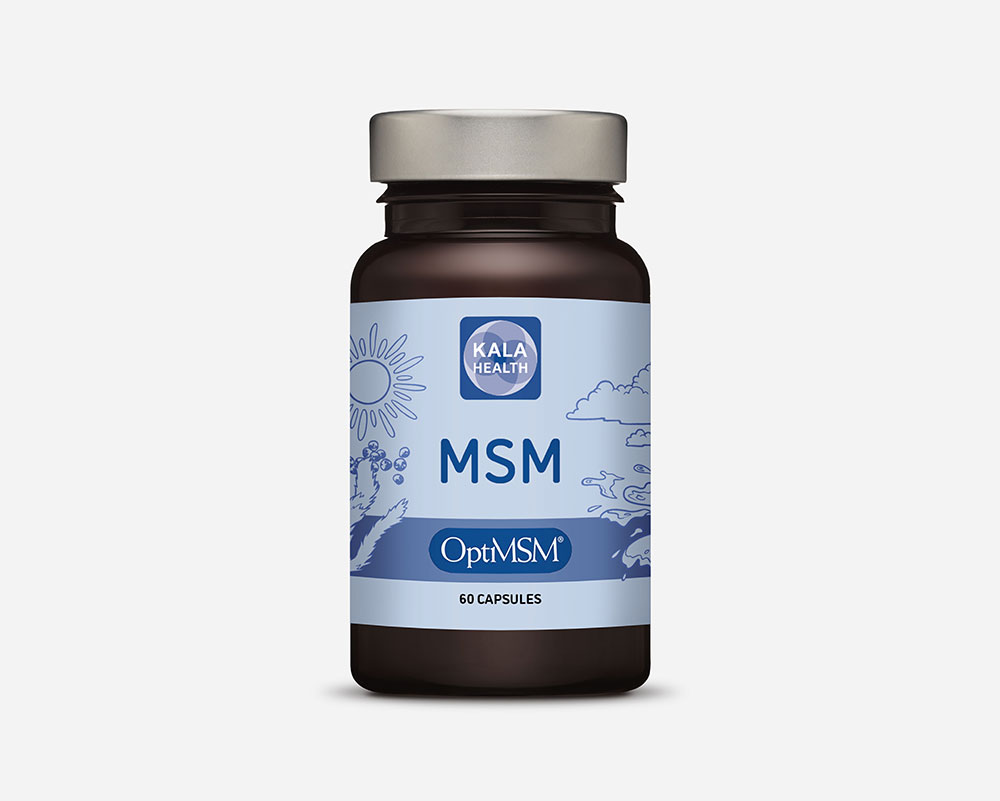
OptiMSM® Capsules
 60 or 180 capsulesFrom: € 24,95
 -
 Select options This product has multiple variants. The options may be chosen on the product page
OptiMSM® Powder Matcha
 Fine powderFrom: € 34,95
 -
 Select options This product has multiple variants. The options may be chosen on the product page
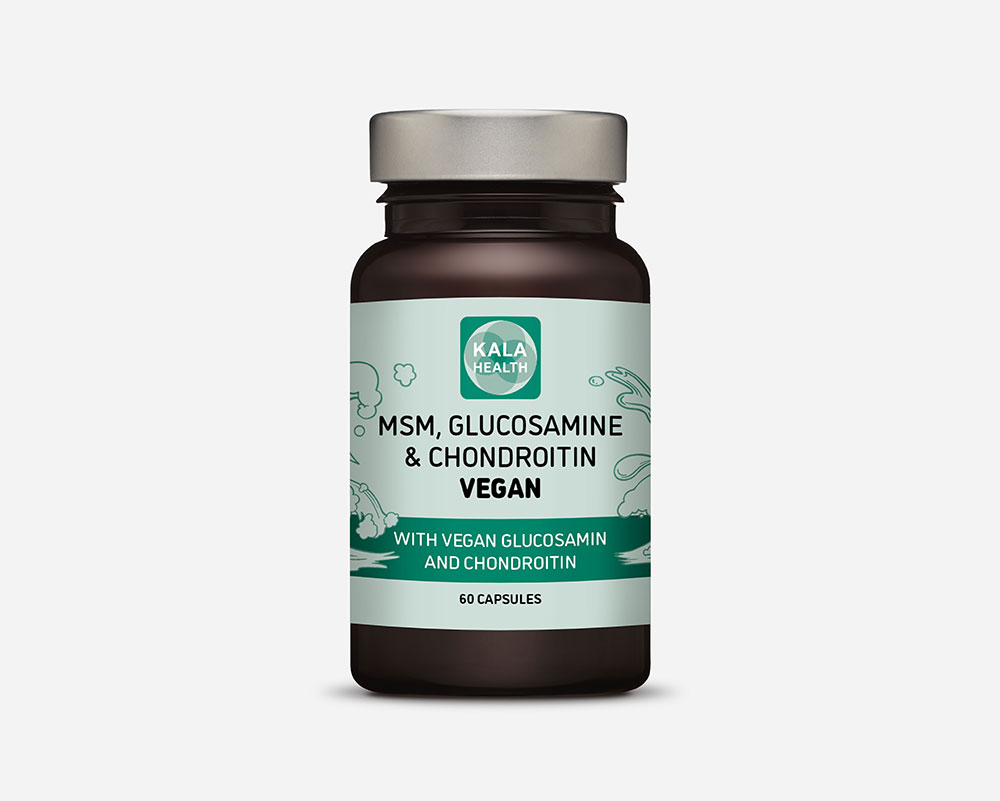
Vegan MSMGC Capsules
60 or 180 CapsulesFrom: € 49,95
Frequently asked questions