
 Made in the Netherlands
 Free product of your choice with orders over €75,-



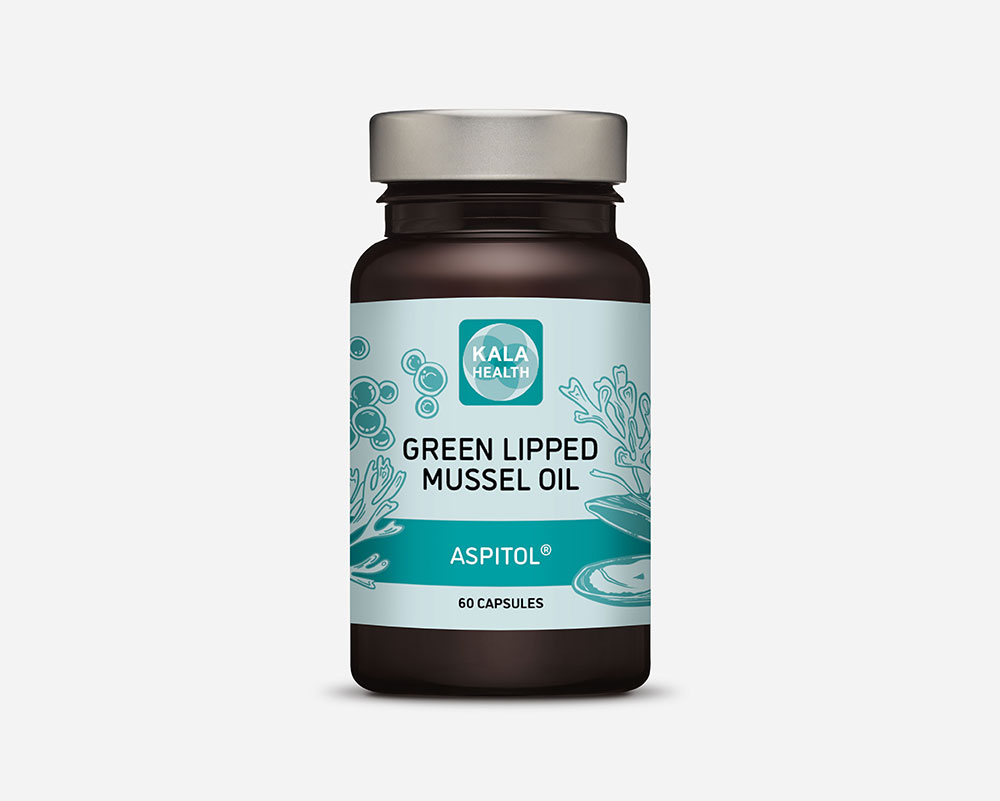
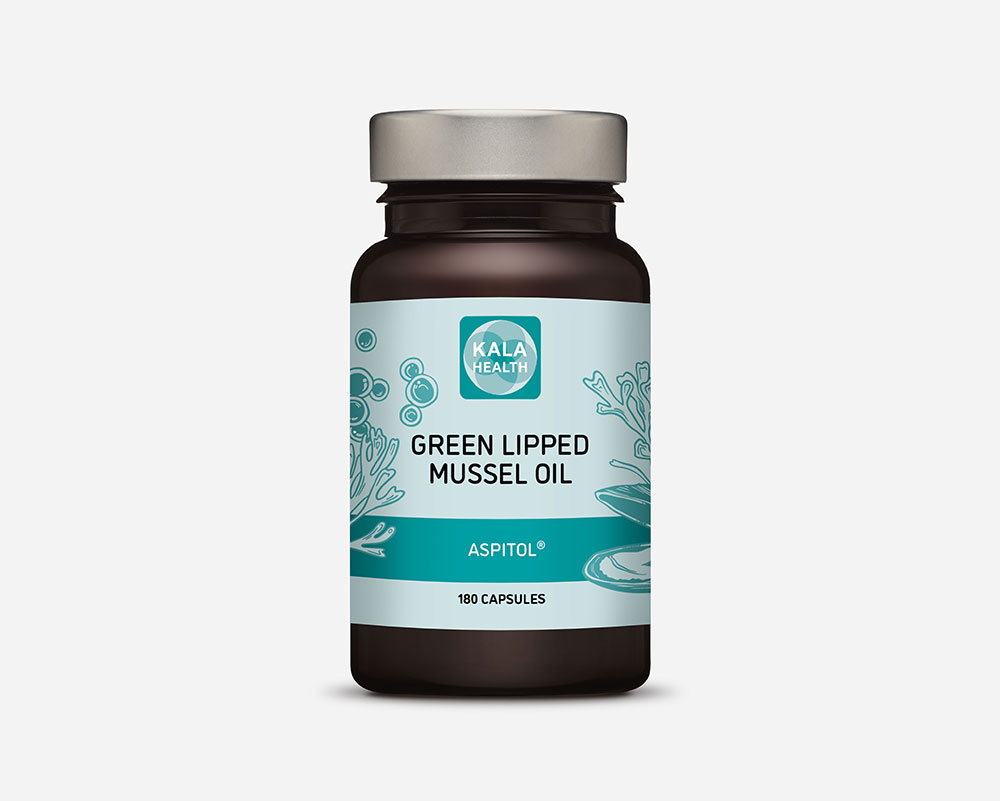
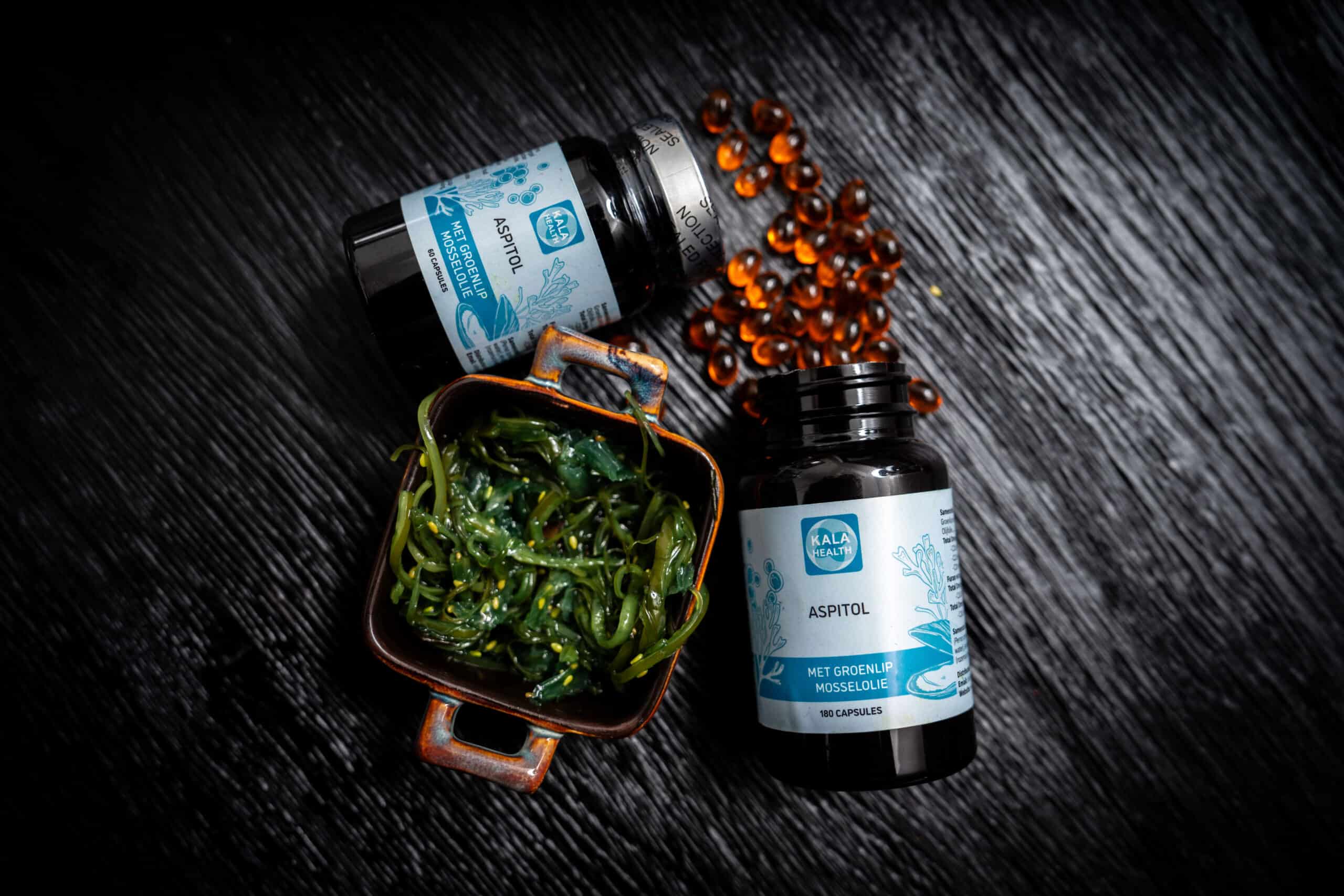
Green-lipped mussel oil (Aspitol®)
- Furan fatty acids: rare furan fatty acids that contribute the greater part of the powerful action of green-lipped mussel oil
- EPA & DHA: omega-3 fatty acids, of which more than 80% are phospholipids, exceptionally well absorbed by the body
- Oil is superior: stabilised green-lipped mussel oil outperforms green-lipped mussel powder


Description
Green-Lipped Mussel Oil ASPITOL®
50 mg of GlycOmega® green-lipped mussel oil per softgel, with a unique fatty acid composition that regular fish oil and krill oil cannot match. Produced in our own certified facility in the Netherlands.
✓ 60 or 180 softgel capsules per bottle ✓ Dutch production ✓ Standardised on the full fatty acid profile
Green-lipped mussel oil: what you need to know
Green-lipped mussel oil is not an ordinary fish oil. This product has been specifically developed to deliver the rare fatty acids that occur exclusively in the New Zealand green-lipped mussel (Perna canaliculus): ETA (eicosatetraenoic acid) and furan fatty acids. The EPA and DHA dosage in this supplement has been deliberately kept low. This is not a high-dose omega-3 capsule, but a targeted supplement for those who specifically want these unique fatty acids.
What is the green-lipped mussel?
The green-lipped mussel (Perna canaliculus) is a mollusc that occurs exclusively in the protected, crystal-clear waters of the Marlborough Sounds on the northern coast of New Zealand. It is not an ordinary mussel: this species filters unusual microalgae from the water that are scarcely found anywhere else in the world, and stores within them rare fatty acids not found in any other marine source.
The indigenous Maori population of New Zealand ate the green-lipped mussel as part of their daily diet for centuries. Scientists noticed striking health differences between coastal Maori communities, who regularly consumed green-lipped mussels, compared to tribe members who lived further inland. That observation was the starting point for decades of scientific research into the bioactive components of the green-lipped mussel.
Unique fatty acid profile: what is in it?
Each softgel contains 50 mg of GlycOmega® green-lipped mussel oil. The oil is standardised on the complete fatty acid profile of the green-lipped mussel. Green-lipped mussel oil does not contain one or two active fatty acids, but a whole palette, including components that occur in no other supplement. That makes it fundamentally different from krill oil or fish oil.
| Active substance | Type | Per 2 softgels | Status | Explanation |
|---|---|---|---|---|
| EPA (C20:5n-3) | Omega-3 | 15 mg | Known | Present in virtually all marine oils. Dosage below the EU threshold for health claims. |
| DHA (C22:6n-3) | Omega-3 | 12 mg | Known | Present in virtually all marine oils. Dosage below the EU threshold for health claims. |
| ETA (C20:4n-3) | Omega-3 | 0.8 mg | Rare | Rare omega-3 fatty acid, unique to green-lipped mussels. |
| Furan fatty acids | Unique Omega-3 | 0.4 mg | Unique | Rare fatty acids with a unique furan ring structure, present exclusively in a limited number of marine sources. |
| Olive oil (excipient) | — | 200 mg | — | — |
| LA (C18:2n-6) | Omega-6 | 10 mg | Known | Linoleic acid from olive oil. |
| OA (C18:1n-9) | Omega-9 | 130 mg | Known | Oleic acid from olive oil. |
The EPA and DHA dosage in this product does not reach the EU reference values for health claims. This product is not intended as a source of EPA and DHA, but as a targeted supplement of ETA and furan fatty acids.
Excipients: olive oil (carrier), bovine gelatin (capsule), glycerol (emulsifier), rosemary extract, vitamin E, vitamin C (antioxidants).
Not suitable for vegetarians or vegans due to the bovine gelatin in the capsule.
ETA: the secret weapon
Eicosatetraenoic acid (ETA; C20:4 n-3) is a rare and remarkable fatty acid in the green-lipped mussel. In terms of molecular structure, ETA strongly resembles arachidonic acid (C20:4 n-6), the omega-6 fatty acid that the human body releases from cell membranes as the starting point of an inflammatory response, and which is then converted into pro-inflammatory eicosanoids via the COX (cyclooxygenase) and LOX (lipoxygenase) enzymes.
This structural similarity has an important physiological consequence: ETA and arachidonic acid compete for the same enzymes (COX and LOX) that convert both fatty acids into signalling molecules (eicosanoids). When ETA binds to these enzymes, there is less room for arachidonic acid. The eicosanoids that ETA produces via these same enzymes belong in part to a different series or have weaker biological activity than the eicosanoids derived from arachidonic acid (McPhee et al., 2007; Treschow et al., 2007).
In addition, ETA can be incorporated into cell membranes at the same position as arachidonic acid (the sn-2 position of the phospholipid). The more ETA is relatively present at that position, the less AA is available as a raw material during a subsequent inflammatory stimulus. This effect builds up over weeks to months of consistent intake.
The net effect is a shift in the balance of signalling molecules. Not an abrupt blockade, but a gradual rebalancing towards less aggressive inflammatory signals.
ℹ No EU-approved health claims exist for ETA. ETA is described here on the basis of its structure and biochemical mechanism.
Furan fatty acids: the hidden strength
Furan fatty acids (also known as F-acids or furanic fatty acids) are a structurally completely different class of fatty acids than ETA or the classical omega-3 fatty acids. Whereas a regular fatty acid consists of a straight carbon chain with a carboxyl group at the end, furan fatty acids contain a furan ring (a five-membered aromatic ring with an oxygen atom) built into the chain.
This ring makes furan fatty acids exceptionally reactive towards free radicals. Furan fatty acids react at high speed with oxygen radicals and lipid peroxyl radicals and neutralise them before they can cause damage to cell membranes and tissues. The furan ring is consumed in the process, the molecule sacrifices itself as an antioxidant.
Furan fatty acids rarely occur in nature. Green-lipped mussels are among the richest known sources. They are present in the oil in relatively small quantities, but their antioxidant effect per molecule is high, comparable to or greater than that of vitamin E.
ℹ No EU-approved health claims exist for furan fatty acids. Furan fatty acids are described here on the basis of their structure and chemical properties.
Green-lipped mussel oil versus krill oil and fish oil
All three contain EPA and DHA, but that is largely where the similarity ends. The table below shows the substantive differences.
| Green-lipped mussel oil | Krill oil | Fish oil | |
|---|---|---|---|
| Origin | Green-lipped mussel (Perna canaliculus), New Zealand | Antarctic krill (Euphausia superba) | Oily fish (salmon, herring, mackerel, etc.) |
| Primary reason for use | ETA and furan fatty acids | EPA + DHA in phospholipid form | EPA + DHA in triglyceride form |
| EPA & DHA | Present, lower content per capsule | Present, moderate content | High content per capsule |
| ETA (rare) | YES: virtually exclusive | No | No |
| Furan fatty acids | YES: unique in nature | No | No |
| Astaxanthin | No | YES: built-in antioxidant | No |
| Stability | Must be stabilised (antioxidant complex) | Naturally stable (astaxanthin) | Susceptible to oxidation |
| Sustainability | Sustainable aquaculture, protected NZ area | CCAMLR-regulated, MSC-certified | Varies widely by brand and source |
Which oil for which purpose?
The three oils are not direct substitutes for each other, they each have their own profile that makes them more or less suitable for specific situations.
Choose green-lipped mussel oil if:
- You are primarily interested in the unique fatty acid composition (ETA and furan fatty acids) that other oils do not contain
- You are looking for a supplement that combines EPA and DHA with the rare bioactive substances that occur exclusively in green-lipped mussels
- You prefer a mild taste and smell compared to classical fish oil
- Sustainability plays a role: green-lipped mussels are produced in certified aquaculture farms in New Zealand
Choose krill oil if:
- Bioavailability of EPA and DHA is the priority: the phospholipid form in krill oil is generally absorbed more efficiently than the triglyceride form in standard fish oil
- You also want astaxanthin, the powerful carotenoid antioxidant that is naturally bound to the phospholipids in krill oil
- You prefer a low-dose supplement in which higher absorption compensates for a lower absolute dosage
Choose fish oil if:
- You are looking for a high dosage of EPA and DHA per capsule at a low cost price
- You use the EU-approved health claims for EPA and DHA as the primary reason; fish oil generally delivers a higher concentration per gram
- You are already familiar with fish oil and have no reason to switch
Anyone taking omega-3 purely for cardiovascular and brain health, and seeking a high concentration of EPA/DHA for that purpose, is better served by krill oil or fish oil. Green-lipped mussel oil delivers less EPA/DHA per capsule in that regard, but adds components that the other oils simply do not contain.
Why green-lipped mussel oil instead of powder?
Green-lipped mussel is also offered as dried powder, usually in capsule form. However, the furan fatty acids and omega-3 fatty acids are difficult to keep stable in powder form, and rapidly lose their biological efficacy through oxidation. For this reason, mussel powder starts to “smell” fairly quickly when exposed to air.
Green-lipped mussel powder is also sold with most of the oil removed. The oil is, after all, an extremely valuable product. The remaining powder hardly contains any active substances and is offered at low prices. Once there are almost no fatty acids left in the green-lipped mussel powder, the powder “smells” less, which often leads people to assume that the powder is of high quality. This, however, is not true.
The oil of the green-lipped mussel is superior to green-lipped mussel powder for the following reasons:
| Oil ✔ | Powder ✘ |
|---|---|
| Green-lipped mussel oil is stabilised and extracted according to patented processes that ensure a stable and standardised oil of consistently high quality. | Green-lipped mussel powder consists of dried and ground mussels and is therefore primarily rich in proteins. Furthermore, a great deal of mussel powder is “defatted”: the valuable oil has been largely removed beforehand through extraction. “Defatted” mussel powder is generally used in (supplementary) animal feed and is much less suitable for human use. |
| Green-lipped mussel oil contains a unique complex of furan fatty acids and omega-3 fatty acids. | In powder form, the furan fatty acids and omega-3 fatty acids cannot be adequately stabilised with an antioxidant. As a result, these fatty acids oxidise quickly, and green-lipped mussel powder rapidly loses its biological activity. |
| The oil form makes it possible to keep green-lipped mussel oil stable by adding a powerful, fat-soluble antioxidant complex. As a result, the active component, the unique mix of furan fatty acids and omega-3 fatty acids, remains biologically active even after several years. | Green-lipped mussel powder contains mainly mussel proteins, which can trigger allergic reactions in humans. |
| Green-lipped mussel oil normalises important biochemical processes in the body, which is important for good health. The enzymes 5-lipoxygenase (LOX) and cyclooxygenase (COX) are part of these biochemical processes. | Green-lipped mussel powder is often claimed to be a rich source of so-called glycosaminoglycans (GAGs), such as glucosamine and chondroitin. Scientific research proves the opposite. Analysis has shown that green-lipped mussel powder contains no more than 2% of GAGs, of which probably less than 0.2% is biologically active. |
| Green-lipped mussel oil is safe to use and has no known side effects during normal use. Both adults and children can use it, and it does not make them drowsy or sleepy. |
In short
Only stabilised green-lipped mussel oil (GLMO) contains the powerful oil fractions, the biologically active component of the green-lipped mussel. Because the oil fraction does not contain any protein, it can also be used safely by people who are sensitive to shellfish and crustaceans. Always use green-lipped mussel oil and never green-lipped mussel powder.
Quality & product processing
Not all green-lipped mussel products are equal. The way they are processed largely determines whether the active substances remain intact.
Stabilisation is crucial
Furan fatty acids are the biologically most active components of the green-lipped mussel, but they are also extremely unstable. High-quality green-lipped mussel oil is stabilised immediately after harvest with an antioxidant complex (for example, rosemary extract, vitamin E and C) to prevent oxidation and keep the active substances intact.
Sustainable origin
The green-lipped mussel (Perna canaliculus) is cultivated exclusively in the protected waters of the Marlborough Sounds in New Zealand, under the supervision of the New Zealand government. Mussel cultivation is inherently sustainable: mussels filter their food (algae) from the water and require no feed, pesticides or antibiotics.
Dosage and use
The dosage of green-lipped mussel oil follows a two-phase schedule. In the first phase (the loading period), a higher dose is taken to gradually build up ETA in the cell membranes. In the maintenance phase, the dose is reduced once that build-up level has been reached.
| Phase | Duration | Dosage | Total ETA per day |
|---|---|---|---|
| Loading period | 4 to 6 weeks | 2 × daily 2 softgels with a meal | 1.6 mg ETA |
| Maintenance phase | Ongoing | 2 × daily 1 softgel with a meal | 0.8 mg ETA |
Points of attention during use
Mollusc allergy (powder): Green-lipped mussel powder contains mussel proteins and can trigger allergic reactions in people with a mollusc allergy. Stabilised green-lipped mussel oil is protein-free and therefore generally safe, but always consult a doctor if in doubt.
Medication and interactions: Do not use green-lipped mussel oil in combination with anticoagulants (blood thinners), chemotherapeutics or immunosuppressants without medical consultation. Also consult a doctor when using other medication.
Pregnancy and breastfeeding: Insufficient safety information is available for use during pregnancy and the lactation period. Consult a doctor prior to use.
Quality control: Choose only stabilised green-lipped mussel oil (GLMO), not deactivated powder. Check for the presence of an antioxidant complex (rosemary, vitamin E/C) and verify the certificate of analysis (COA) of the manufacturer.
Gastrointestinal complaints: Side effects are rare but are occasionally reported, in particular mild gastrointestinal complaints. Preferably take the capsules with a meal.
* Food supplements are not a substitute for a varied and balanced diet and a healthy lifestyle.
The descriptions of ETA and furan fatty acids concern the composition and structural properties of these substances. No EU-approved health claims exist for ETA and furan fatty acids.
Why Kala Health
Kala Health produces this supplement entirely in-house, at our certified production facility in the Netherlands. We have no intermediary: we purchase the raw materials directly, have them tested independently, and combine them into our own formula. That enables a level of transparency that generic supplement brands cannot offer. And it keeps the price low.
Product properties
- 50 mg of GlycOmega® green-lipped mussel oil per softgel, standardised on the complete fatty acid profile
- Contains ETA and furan fatty acids, rare bioactive fatty acids that occur exclusively in the New Zealand green-lipped mussel
- Stabilised with an antioxidant complex (rosemary extract, vitamin E, vitamin C) to preserve biological activity
- Produced in our own certified facility in the Netherlands
- Raw materials purchased directly; no intermediary, no storage by third parties
- Independently tested by Eurofins for heavy metals, PAHs, peroxide value, acidity and microbiological safety
- All ingredients accompanied by supplier certificates and quality guarantees
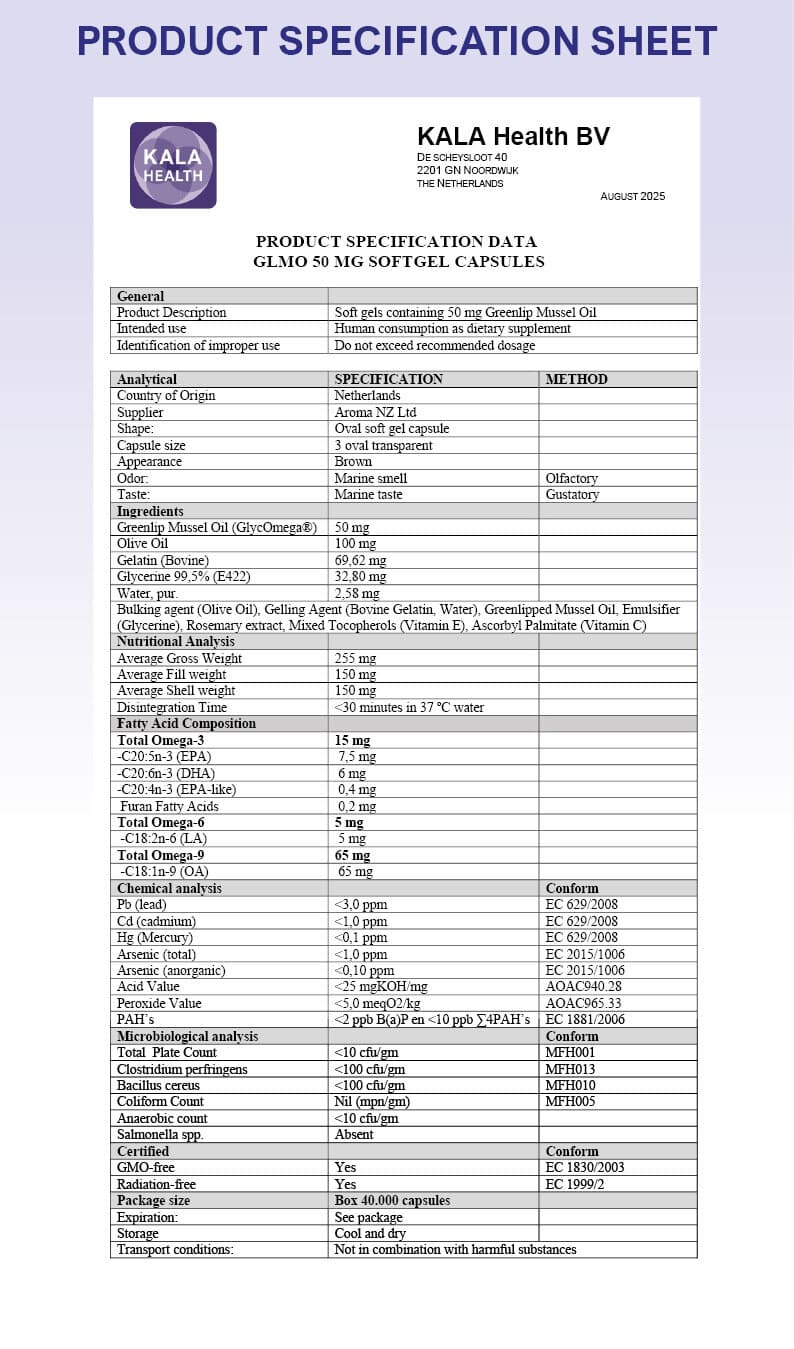
- Product Specification Sheet available in the product gallery
- Sustainable origin: cultivated in the Marlborough Sounds, New Zealand
- GMO-free and non-irradiated in accordance with EU legislation (EC 1830/2003 and EC 1999/2)
About Kala Health
Kala Health was founded in 1997 by Paul Klein Breteler. Since then, he has been formulating his own supplements, treating clients and advising on nutrition and supplementation. That combination of developing, producing and advising has always been the core of Kala Health. We make no compromises on quality and carefully test all raw materials in independent laboratories.
Today we work with a team of nutrition specialists, an in-house therapist and a pharmacist. Everything takes place at our own certified facility in the Netherlands: from raw material analysis to finished product, under our own supervision. This integrated approach enables us to deliver products you can fully rely on: transparent, pure and effective.
References
- McPhee, S., Hodges, L. D., Wright, P. F., Wynne, P. M., Kalafatis, N., Harney, D. W., & Macrides, T. A. (2007). Anti-cyclooxygenase effects of lipid extracts from the New Zealand green-lipped mussel, Perna canaliculus. Comparative Biochemistry and Physiology. Part B, Biochemistry & Molecular Biology, 146(3), 346–356. https://doi.org/10.1016/j.cbpb.2006.11.001
- Treschow, A. P., Hodges, L. D., Wright, P. F., Wynne, P. M., Kalafatis, N., & Macrides, T. A. (2007). Novel anti-inflammatory omega-3 PUFAs from the New Zealand green-lipped mussel, Perna canaliculus. Comparative Biochemistry and Physiology. Part B, Biochemistry & Molecular Biology, 147(4), 645–656. https://doi.org/10.1016/j.cbpb.2007.04.004
Questions about green-lipped mussel oil?
Would you like to learn more about green-lipped mussel oil or do you have questions about your own situation? Our team of nutrition specialists and therapists is happy to think along with you. Call us on (+31) 070 345 0290 or email info@kalahealth.eu.
Composition
Green-lipped Mussel Oil (As Aspitol®) contains the following ingredients:
Ingredients
| Contents per 2 capsules: | %ADH | |
|---|---|---|
| Green Lipped Mussel Oil (GlycOmega®) | 100 mg | - |
| Olive Oil | 200 mg | - |
| Total Omega-3 | 30 mg | - |
| C20:5n-3 (EPA) | 15 mg | - |
| C22:6n-3 (DHA) | 12 mg | - |
| C20:4n-3 (Newly Discovered) | 0,8 mg | - |
| Furan Fatty Acids | 0,4 mg | - |
| Total Omega-6 | 10 mg | - |
| C18:2n-6 (LA) | 10 mg | - |
| Total Omega-9 | 130 mg | - |
| C18:1n-9 (OA) | 130 mg | - |
Ingredients: Green-lipped Mussel Oil (Perna canaliculus), Olive Oil, Gelatin (beef gelatin, water), Emulsifier (glycerol), Antioxidants (Rosemary Extract, Vitamin E, Vitamin C).
Guaranteed Free from: Preservatives, synthetic fragrances, colorings, and flavorings.
Allergen Information: This product may contain traces of mollusks (mussel oil)
Use & dosage
Recommended use
Dosage of Green-lipped Mussel Oil: For adults, it is recommended to use 2 softgels twice a day with a meal for 4-6 weeks. After that, you can reduce the dosage to 1 softgel twice a day with a meal, or as recommended. For children, adjust the mussel oil dosage based on body weight.
Mandatory Disclaimer: A dietary supplement is not a substitute for a varied diet. A varied, balanced diet, and a healthy lifestyle are essential. This product is a dietary supplement (fatty acid supplement).
Safety Note: Consult a healthcare professional before using supplements during pregnancy, lactation, if taking medication, or if you have a medical condition.
Storage advice
Storage: Store in a dry place at room temperature, and keep out of reach of small children.
Frequently asked questions