
 Made in the Netherlands
 Free product of your choice with orders over €75,-




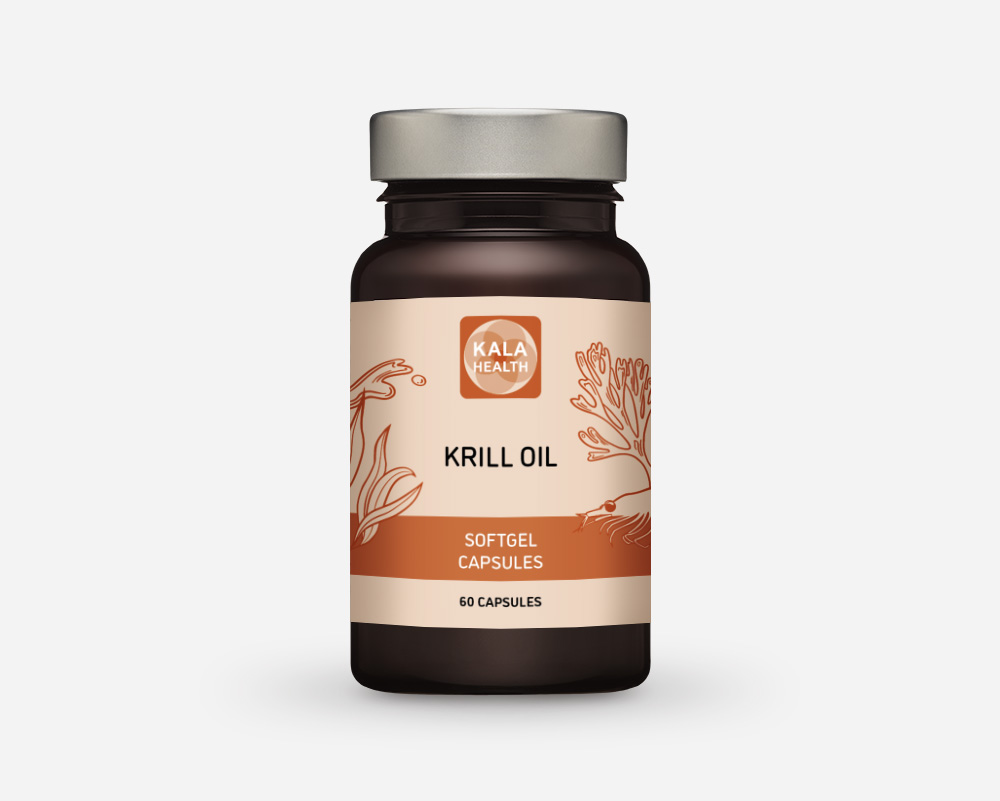
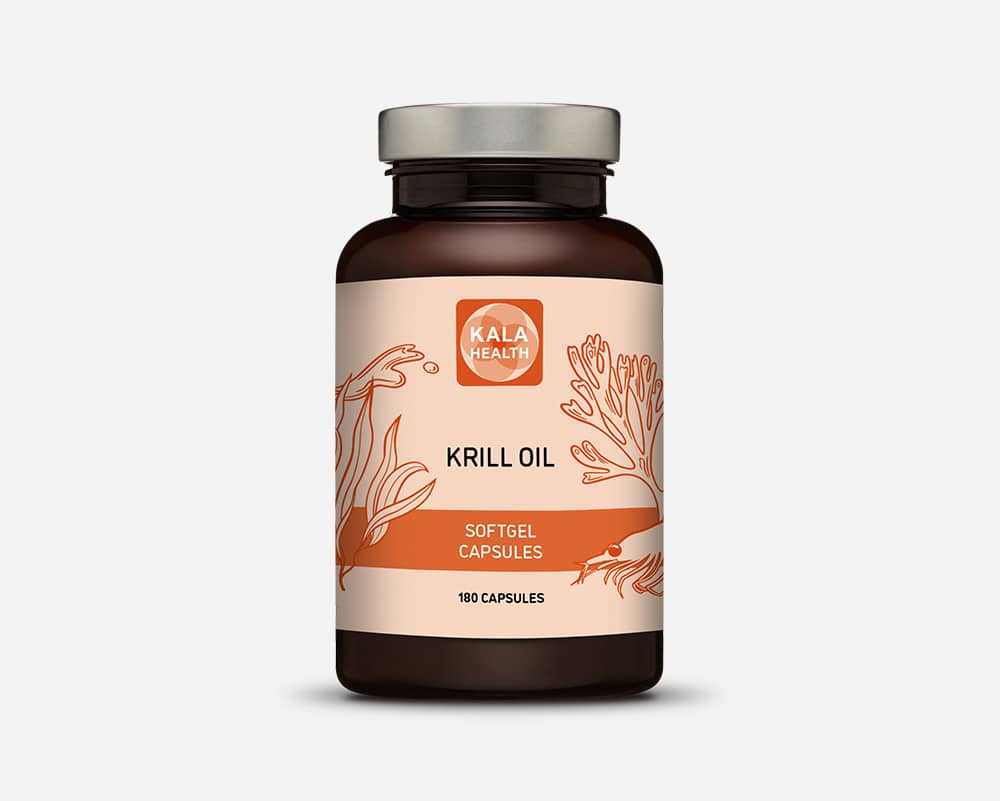

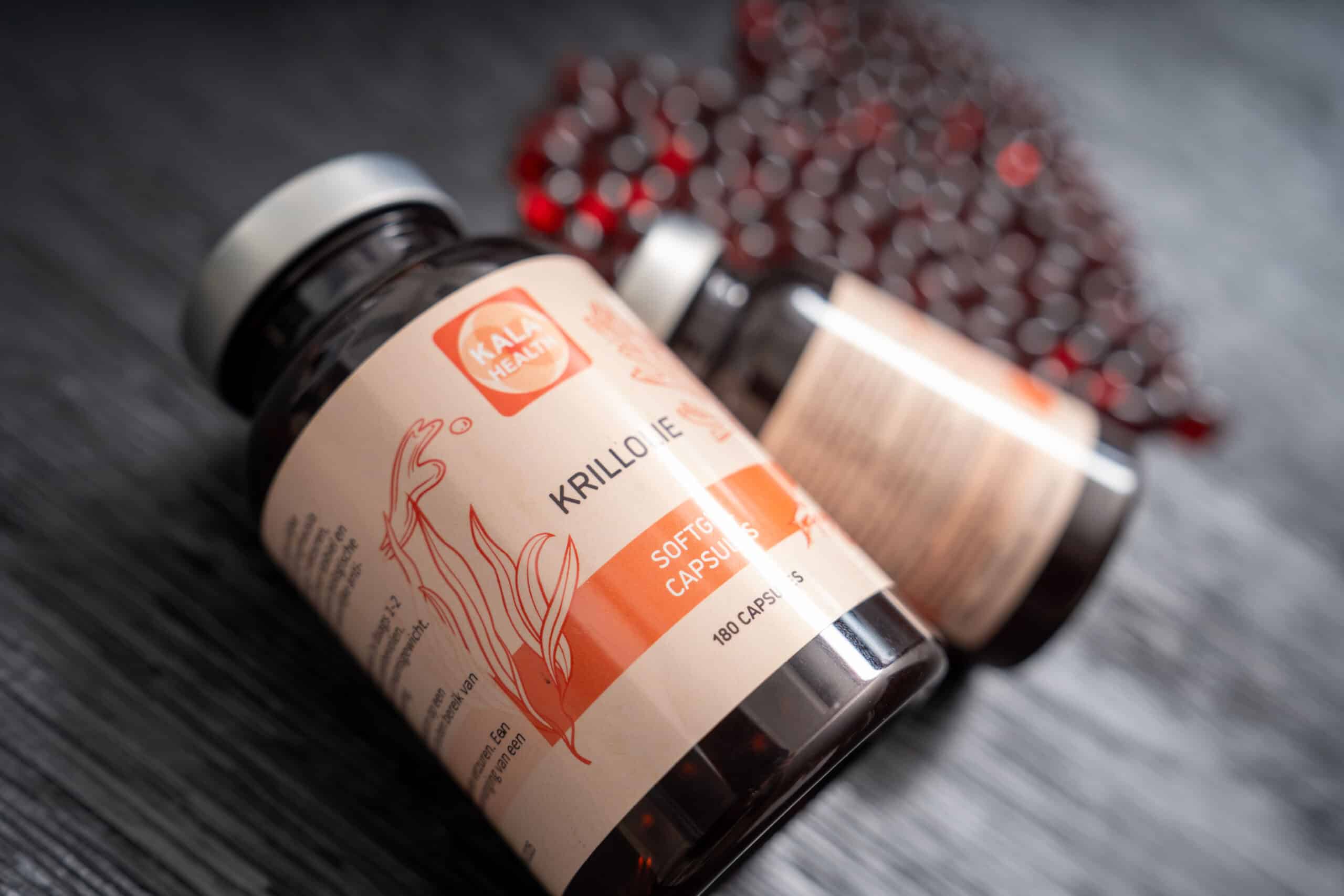
Krill oil
- Phospholipid form: EPA and DHA in the body’s own molecular form for direct and efficient absorption, without fishy aftertaste or burping
- Enriched with astaxanthin: Natural antioxidant that protects omega-3 fatty acids against oxidation
- Sustainable and traceable: Caught in the clean Antarctic waters under supervision of the CCAMLR


Description
Krill Oil Softgel Capsules
Sourced from Antarctic krill. A pure, sustainable source of omega-3 fatty acids in phospholipid form, enriched with the antioxidant astaxanthin. Discover what omega-3 fatty acids are, how krill oil differs from fish oil, and what to look for when choosing a quality supplement.
✓ 60 or 180 softgel capsules per pack ✓ Produced in the Netherlands ✓ Sustainably caught Antarctic krill
What are omega fatty acids?
Omega fatty acids are (polyunsaturated) fats that the human body cannot produce on its own. They are therefore essential through diet or supplementation. They play a fundamental role in the construction of cell membranes, the maintenance of normal fat levels in the blood, and the functioning of the brain and heart.
The omega family: more than omega-3 alone
Omega-3 has attracted the most attention for decades, and for good reason: it is the fatty acid that the average Westerner is most deficient in. But omega fatty acids form a broader family, each with its own role.
Omega-6 is, like omega-3, essential — the body cannot produce it on its own. The problem here is not a deficiency, but an excess. The Western diet contains on average 15 to 20 times more omega-6 than omega-3, mainly due to the widespread use of cheap vegetable oils such as sunflower and corn oil. Omega-3 and omega-6 compete for the same conversion enzymes in the body: when the ratio becomes severely imbalanced, omega-6 displaces the active effect of omega-3. The evolutionary ratio of omega-6 to omega-3 was around 1:1 to 1:4, but in our current diet it can sometimes reach 25:1 — an important reference point when assessing your dietary pattern.
Omega-9 (C18:1; oleic acid, the basis of olive oil) is not essential because the body produces it itself, but it does contribute to the maintenance of normal cholesterol levels in the blood.
Omega-7 (C16:1; palmitoleic acid) is the least well-known member of the family, and as a result no specific health claims have yet been approved for this unsaturated fatty acid. Although omega-7 is increasingly being included in scientific research.
The key message: omega-3 supplementation is most effective when omega-6 intake is consciously reduced at the same time.
What else should you know about omega-3 fatty acids?
There are three main types of omega-3 fatty acids, each with its own function and source:
| EPA (Eicosapentaenoic acid) | DHA (Docosahexaenoic acid) | ALA (Alpha-linolenic acid) |
|---|---|---|
| Marine omega-3, an essential fatty acid from oily fish and krill oil. Supports normal blood pressure and the maintenance of normal triglyceride levels in the blood. Recommended daily dose together with DHA: minimum 250 mg. | Marine omega-3, beneficial for brain function and vision. Makes up approx. 40% of the polyunsaturated fats in the brain. DHA intake by the mother contributes to the normal development of the brain in the foetus and in infants who are breastfed. | The plant-based basic form of omega-3. Found in linseed oil, chia seeds, walnuts and soybeans. The body can only convert ALA into EPA and DHA to a limited extent (< 10%) and it primarily serves as an energy source and building material. |
Omega-3 in food: where can you find it?
The plant-based variant ALA is found in linseed oil, walnuts, chia seeds, hemp seeds, soybeans and green leafy vegetables. The marine variants EPA and DHA are found mainly in:
- Salmon, herring, mackerel, sardines, anchovies and tuna (oily fish, recommended 1x per week)
- Krill and other crustaceans
- Algae oil (suitable for vegetarians and vegans)
Recommended daily intake: minimum 250 mg EPA + DHA per day for normal heart function (EFSA). Do you eat oily fish less than once a week? Then supplementation is advisable.
Approved EU health claims:
- ✔ Blood pressure: DHA and EPA contribute to the maintenance of normal blood pressure.
- ✔ Triglycerides: DHA and EPA contribute to the maintenance of normal triglyceride levels in the blood.
- ✔ Heart: DHA and EPA contribute to the normal function of the heart.
- ✔ Vision: DHA contributes to the maintenance of normal vision, and DHA intake by the mother contributes to the normal development of the vision of the foetus and of infants who are breastfed up to 12 months.
- ✔ Brain: DHA contributes to the maintenance of normal brain function, and DHA consumed by the mother is an important building block for the brain of the foetus and of infants who are breastfed.
- ✔ Cholesterol: Replacing saturated fats with unsaturated fats in the diet contributes to the maintenance of normal cholesterol levels in the blood. This applies to all omega fatty acids.
Krill oil vs. fish oil
Both krill oil and fish oil contain the essential omega-3 fatty acids EPA and DHA, but in a fundamentally different molecular form. This difference affects the absorption, stability and purity of the product, and is greater than it may initially appear.
In fish oil, the fatty acids are bound as triglycerides: three fatty acid chains attached to a single glycerol molecule. Before the body can absorb these fatty acids, the triglycerides must first be fully broken down by digestive enzymes. Fish oil also mixes poorly with water. It floats in large droplets on the stomach contents, which explains the familiar fishy aftertaste and burping.
Krill oil works differently. In krill oil, the fatty acids are bound as phospholipids: one of the three fatty acid chains is replaced by a hydrophilic phosphate group. Phospholipids are precisely the molecules from which the walls of every human cell are built. They are literally native to the body. Because phospholipids are naturally water-friendly, krill oil forms microscopically small droplets in the stomach that mix with the stomach contents. From the small intestine, these droplets are absorbed quickly and directly into the bloodstream, without the intermediate step of full breakdown. The result: virtually no burping, and efficient absorption.
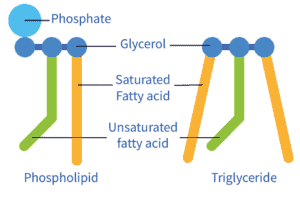
Schematic difference between a phospholipid (krill oil) and a triglyceride (fish oil).
Because krill oil is better absorbed, you need less krill oil to get sufficient omega-3 fatty acids.
Phospholipids are also inherently more stable than triglycerides, which means krill oil oxidises less quickly than fish oil. In addition, we add an extra layer of protection: our krill oil also contains astaxanthin. As an antioxidant, astaxanthin actively protects the vulnerable omega-3 fatty acids against oxidation, both in the capsule and during digestion.

Krill oil mixes in water into microscopically small droplets (left). Fish oil floats in large droplets on the liquid (right).
| Krill oil (phospholipids) | Fish oil (triglycerides) |
|---|---|
| EPA & DHA bound to phospholipids, the building blocks of cell membranes | EPA & DHA in triglyceride form, requires an extra conversion step in the intestine |
| Faster passage through the cell wall, including the blood-brain barrier | Higher concentration of EPA and DHA needed to obtain the same omega-3 fatty acids |
| Contains astaxanthin: powerful antioxidant, protects the oil itself | Often contains no astaxanthin and oxidises more quickly |
| No fishy taste or burping due to faster absorption | More often fishy taste and burping |
| Low in the food chain: naturally fewer heavy metals | Higher risk of contamination via larger fish species |
The cherry on top: krill oil is clean, sustainable and traceable.
Pressure on fish stocks is increasing as global demand for omega-3 fatty acids grows. Fish populations are being overfished worldwide, and the origin of fish oil is almost always unknown. With krill oil, we know exactly where it comes from and that there is no overfishing. Krill fishing takes place in the clean Antarctic waters and is under the full supervision of the Commission for the Conservation of the Antarctic Marine Living Resources (CCAMLR), an international treaty that regulates the sustainable harvesting of krill. In Area 48 in the Southern Ocean (the only area where krill fishers are permitted to operate), the krill industry is allowed to catch just one percent of the estimated 60 million tonnes of krill.
Kala Health krill oil capsules deliver 100% natural unsaturated fatty acids from a guaranteed clean environment, caught using ecologically responsible fishing methods. The softgel capsules contain the cleanest, most efficient and most stable unsaturated fatty acids known.
When should you choose krill oil?
- You do not eat oily fish regularly (at least once a week)
- You want to support the normal function of the heart, brain and vision
- You want omega-3 in a form that suits your body (phospholipids, as also found in cell membranes)
- You experience stomach complaints or burping from fish oil
- You want to benefit from the built-in antioxidant astaxanthin
- You are pregnant and/or breastfeeding and want to support the normal development of the brain and eyes of your foetus or breastfed baby
- Sustainability and purity are high on your list of priorities
Also take a look at our other omega formulas
- Green Lipped Mussel Oil (Aspitol®), omega-3 fatty acids in phospholipid form; contains rare furan fatty acids responsible for the powerful effects of green lipped mussel oil
- Vegan Omega-3, rich in omega-3 fatty acids of plant origin; requires no conversion of fatty acids ALA and SDA to EPA and DHA
What should you watch out for?
Krill oil is generally safe and well tolerated, but there are a number of practical points that you as a user should be aware of.
Important: points to consider when using krill oil
Oxidation: Omega-3 fatty acids are sensitive to light, heat and oxygen. Always store supplements in a cool, dry and dark place. A strong rancid or fishy smell is a warning sign. Do not use the oil in that case.
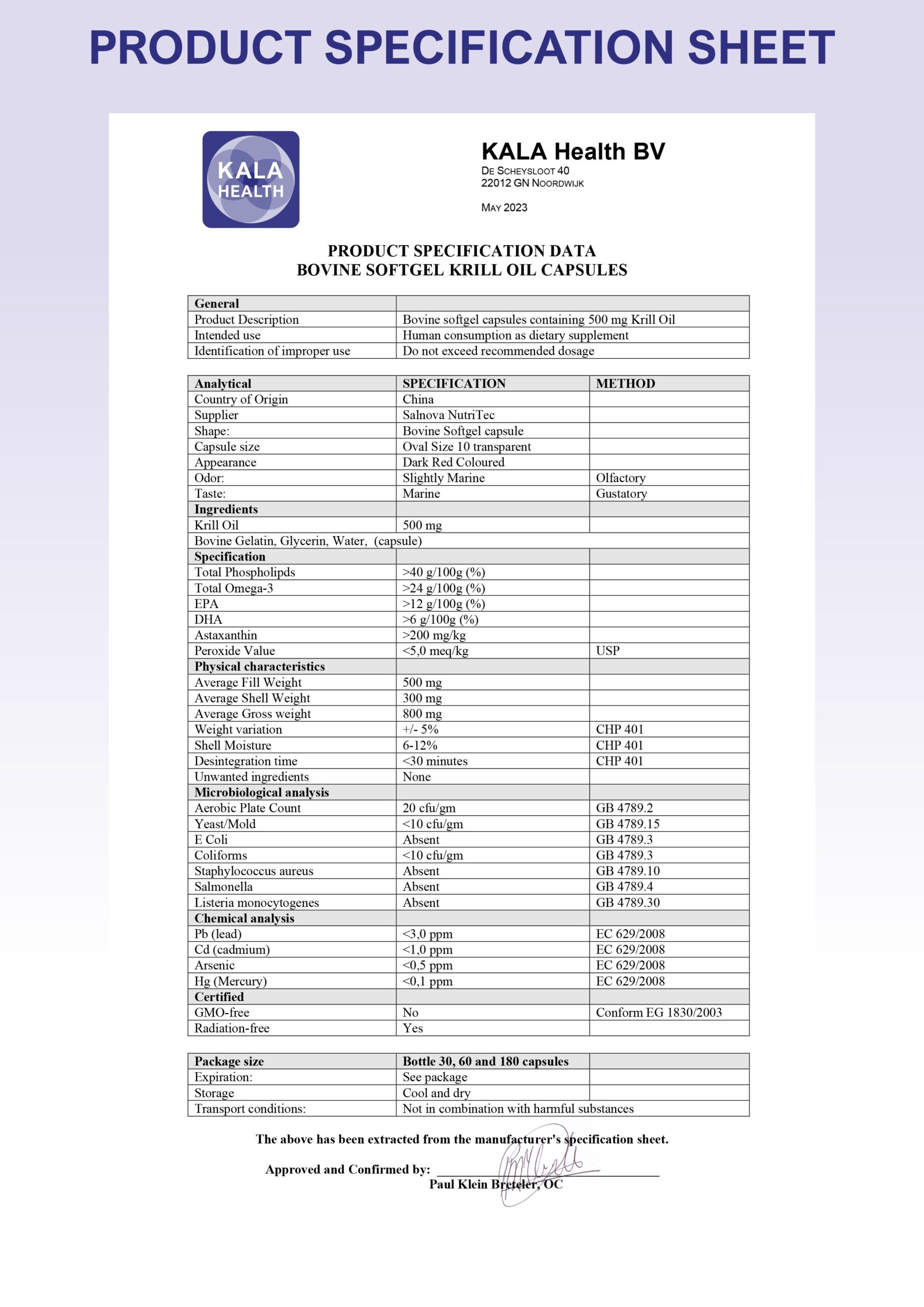
Contaminants (PCBs and heavy metals): Krill is low in the food chain and naturally contains fewer contaminants than larger fish species. Nevertheless, always choose products with a certificate of analysis (COA) from an independent laboratory.
Shellfish allergy: Krill oil is derived from crustaceans. People with a known allergy to shrimp, lobster or other shellfish should avoid krill oil and consult a doctor.
Blood thinners and medication: Omega-3 fatty acids have a mild blood-thinning effect. Always consult a doctor when using anticoagulants (such as warfarin) and when taking more than 1,000 mg EPA + DHA per day.
Avoid the ethyl ester form: Some cheaper omega-3 supplements contain EPA and DHA in ethyl ester form (EE), a synthetic form that is less well absorbed. Preferably choose the triglyceride or phospholipid form (TG or PL).
If the label only states “fish oil concentrate” without explicitly mentioning that it is in triglyceride, natural or re-esterified triglyceride form (rTG), it is likely an ethyl ester. If the capsule also contains a very high concentration of EPA and DHA, often together around 90%, that is also a near-certain indication of an ethyl ester form.
Dosage and expectations: Per capsule, the absolute EPA/DHA dose of krill oil is lower than that of concentrated fish oil. Read the label carefully to determine the correct daily dosage. Taking more capsules is not a problem, but bear in mind the daily maximum.
Questions about krill oil?
Would you like to know more about krill oil or do you have questions about your own situation? Our team of nutrition specialists and therapists is happy to help. Call us on (+31) 070 345 0290 or email info@kalahealth.eu.
Written by Marijn Lewis, PhD
Science Communication & Nutrition Research at Kala Health
Composition
Ingredients
Use & dosage
Recommended use
| For Who? | Daily Dosage |
|---|---|
| Adults: | 1 - 2 softgels per day |
Daily dosage: Adults, take 1 to 2 softgels twice daily, or as recommended. Preferably, take during a meal. Adhere to the (recommended) daily dosage.
Mandatory statement: A dietary supplement is not a substitute for a varied diet. A varied, balanced diet, and a healthy lifestyle are important. This product is a dietary supplement (fatty acid preparation).
Safety: Consult a professional before using supplements in case of pregnancy, lactation, medication use, and illness.
Frequently asked questions