
 Made in the Netherlands
 Free product of your choice with orders over €75,-





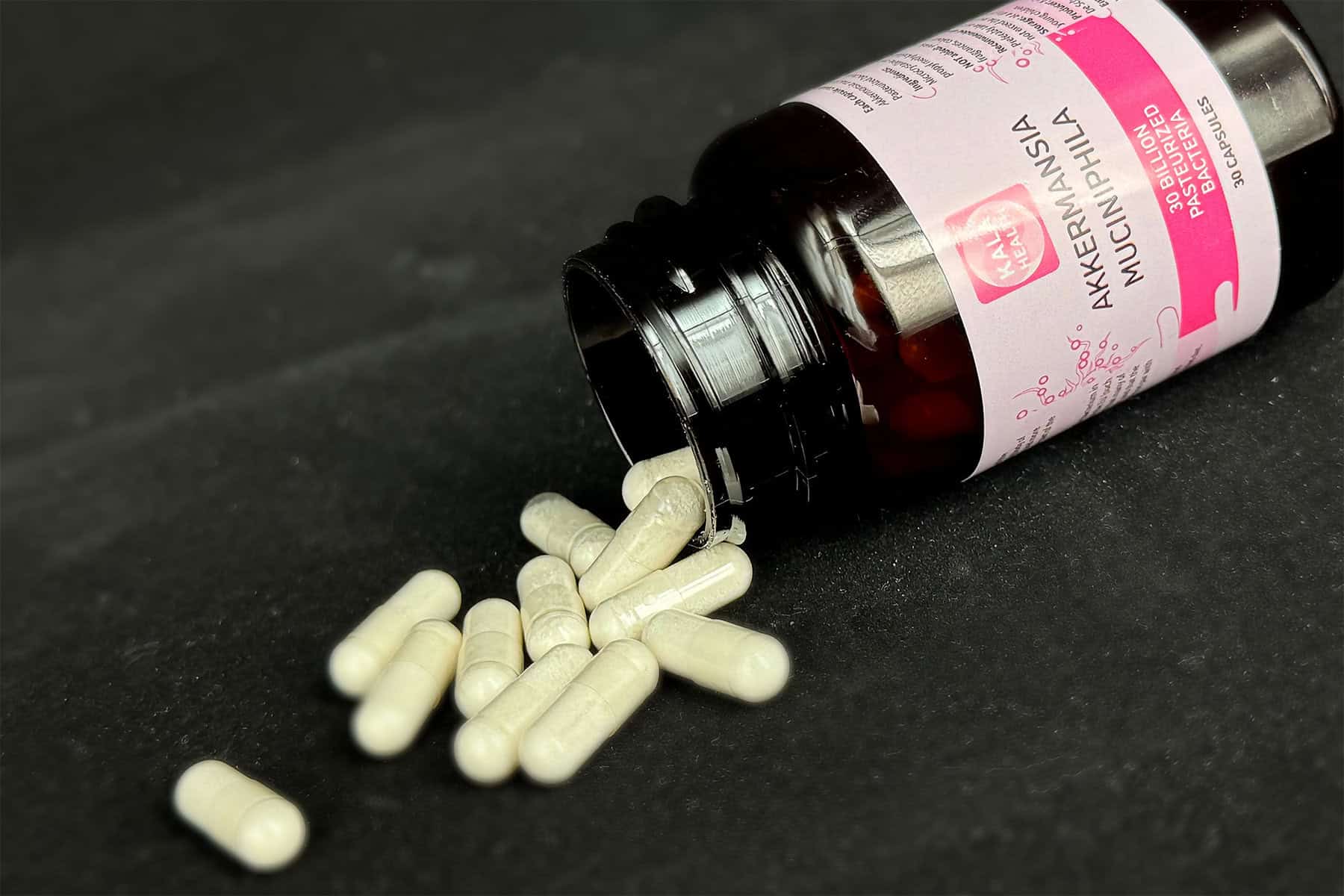
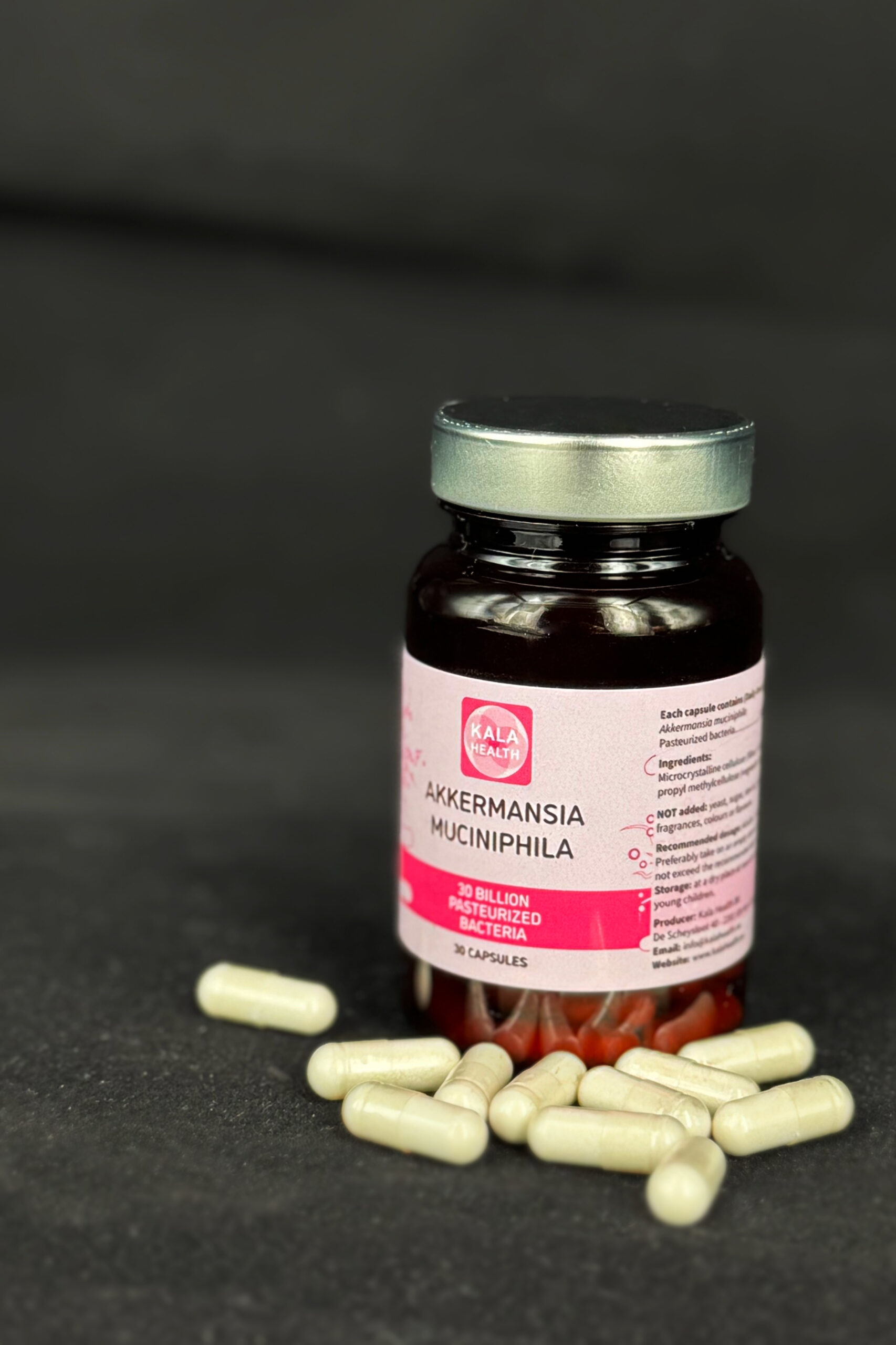
Akkermansia Capsules
- 50% cheaper than other brands: Better quality, but much more affordable.
- 30 billion pasteurized bacteria: Scientifically validated dosage per capsule.
- Produced in our own facility: Complete quality control, from raw material to final product.


Description
Akkermansia Muciniphila Capsules
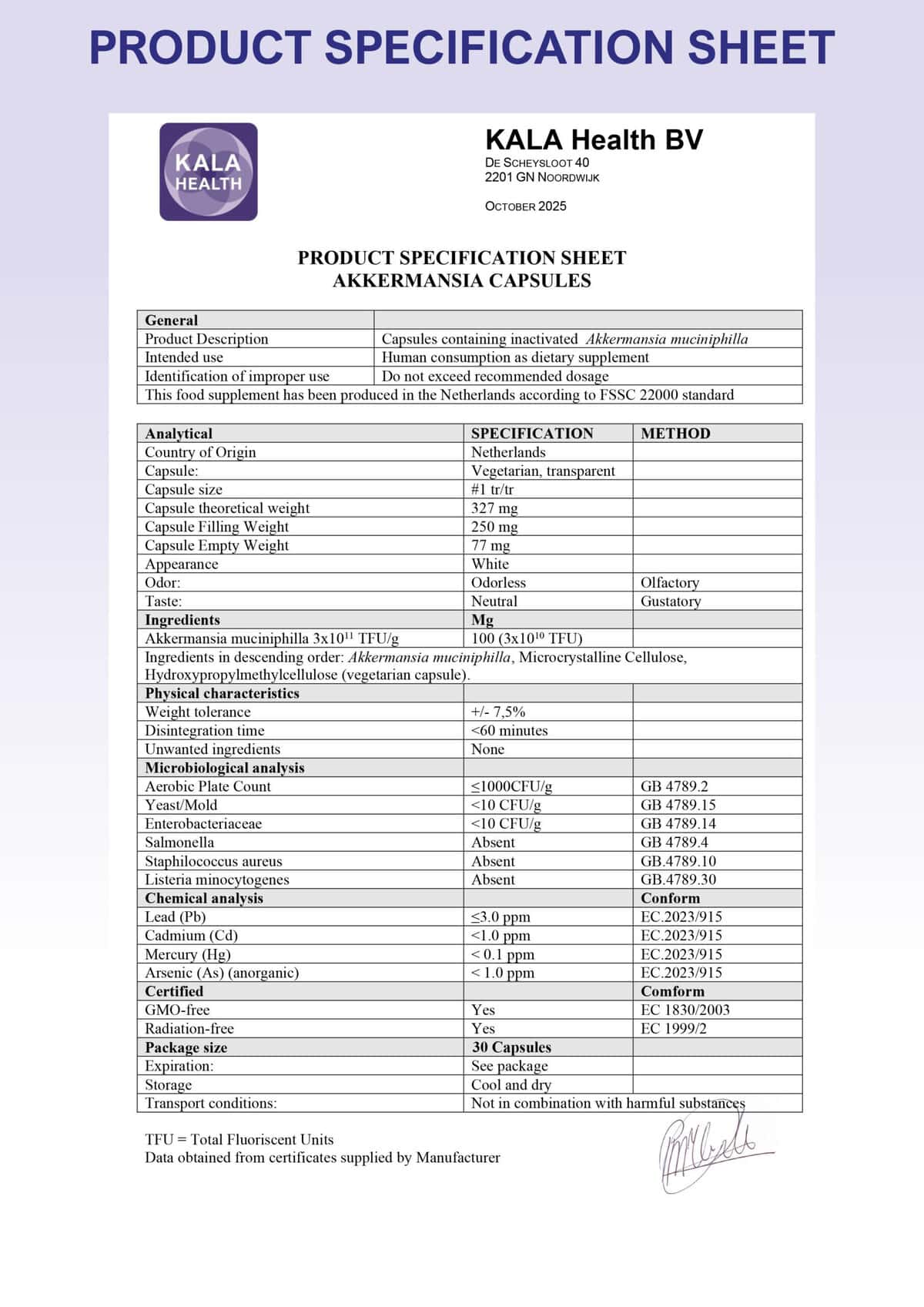
30 billion pasteurised bacteria per capsule. Produced in our own factory in the Netherlands, at half the price of comparable products.
✓ 30 capsules per pack ✓ Produced in the Netherlands ✓ 50% cheaper
Akkermansia Muciniphila: what you need to know
Akkermansia muciniphila is the only known gut bacterium that lives exclusively on mucin, the gel-like layer of mucus that protects your intestinal wall. While other bacteria depend on what you eat, Akkermansia does not. It creates its own space, deep in the mucus layer, in direct contact with the cells of your intestinal wall.
The bacterium was discovered in 2004 by researchers at Wageningen University and is named after microbiologist Antoon Akkermans. Since then, the number of scientific publications on Akkermansia has exploded: from an unknown name to one of the most researched microorganisms in the gut flora.
The Akkermansia Muciniphila bacterium under a microscope.
How does Akkermansia work?
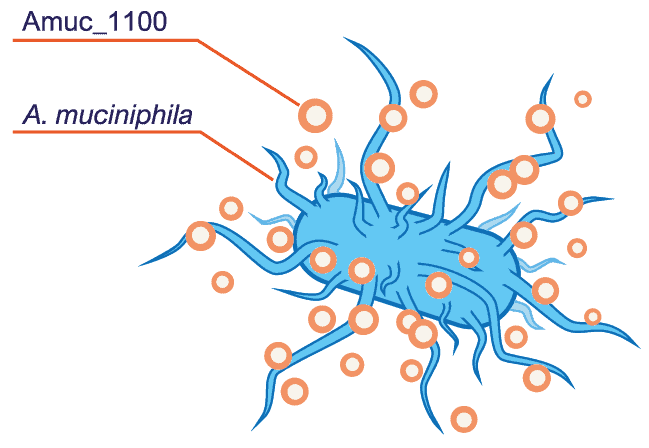
The effect of Akkermansia lies not in the bacterium itself, but in the proteins on its outer membrane. One of the most researched of these is Amuc_1100. This protein communicates with Toll-like receptor 2 (TLR2) on your intestinal wall cells.
TLR2 is part of your immune system and plays a role in maintaining the gut barrier. When Amuc_1100 makes contact with TLR2, this contributes to the integrity of the intestinal wall. A strong barrier prevents unwanted substances, such as lipopolysaccharides, from crossing the intestinal wall (Cani & de Vos, 2017).
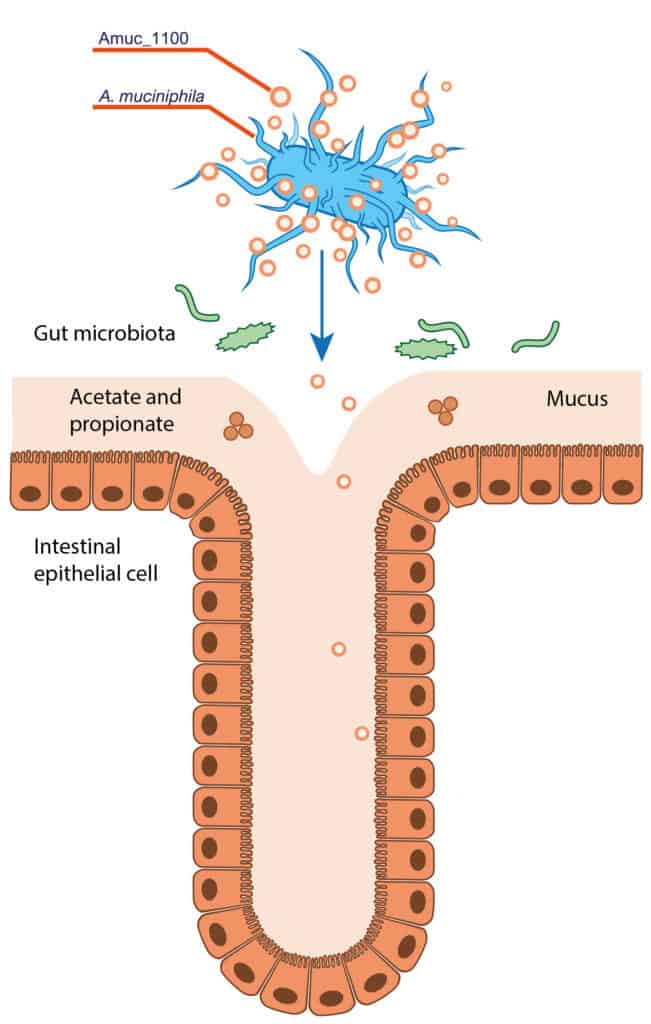
Schematic representation of Akkermansia Muciniphila with Amuc_1100 proteins in the mucus layer of the gut, above the intestinal epithelial cells.
Pasteurised vs. live: not what you expect
When you first hear about pasteurised bacteria, you might think: that is the inferior option. Surely live is always better?
That turns out not to be the case.
In the EU, live Akkermansia muciniphila is not permitted in food supplements. But even if it were, we would probably choose the pasteurised form. The reason lies not in regulation, but in how this bacterium works.
Pasteurisation kills the bacterium but leaves the outer membrane fully intact, including proteins such as Amuc_1100. The most important evidence comes from the Microbes4U trial: a triple-blind, placebo-controlled study published in 2019 in Nature Medicine. Participants took pasteurised Akkermansia muciniphila daily for three months. The results spoke for themselves: the article has since become one of the most cited publications in the entire microbiome field. The full study is freely accessible via the reference on this page (Depommier et al., 2019). In May 2026, Maastricht University Medical Center published a randomised controlled trial in Nature Medicine on the effects of daily supplementation with pasteurised Akkermansia muciniphila, in which participants took 30 billion cells daily for 24 weeks (Mount et al., 2026).
Researchers describe that pasteurisation opens the cell wall while the protein structure of Amuc_1100 is preserved. This explains why virtually all current clinical research specifically uses the pasteurised form. Not as a compromise, but as a deliberate choice (Plovier et al., 2017; Cani et al., 2022).
Moreover, live Akkermansia bacteria can theoretically break down the mucus layer in the gut, after all they feed on it, and compete with other microorganisms. With pasteurised Akkermansia these factors do not apply. The product can therefore also be easily combined with other probiotics, precisely because there are no interactions with live strains.
An additional practical advantage: pasteurised Akkermansia is stable at room temperature.
30 billion bacteria per capsule
Each capsule contains 30 billion pasteurised Akkermansia muciniphila cells (3×10¹⁰ TFU). This is the dosage used in clinical studies. Lower dosages exist on the market but are not in line with what researchers use.
Give it 90 days
Clinical studies maintain periods of at least 90 days before researchers draw conclusions. Your gut flora is a complex ecosystem that needs time to respond to changes. One pack contains 30 capsules, sufficient for one month. We recommend using at least three packs consecutively before evaluating for yourself.
Fully produced in the Netherlands
We import the Akkermansia raw material and produce the capsules in our own FSSC 22000-certified facility in the Netherlands. Purchasing, testing, production and packaging: all under one roof.
The raw material is tested before it enters our factory. We check for identity, cell concentration and contaminants. Only after approval does the raw material enter production.
We test the finished product again. Every batch is checked for:
- Pathogens: E. coli, Salmonella, Listeria
- Heavy metals: lead, arsenic, cadmium, mercury (well below EU limits)
- Microbiological purity: yeasts and moulds
All specifications are available in the product gallery on this page.
Half the price
We previously sold Akkermansia from another brand. We believed so strongly in this bacterium that we wanted it in our range, even though it was not our own production. But that did not fit with how we work. So we searched for the right source ourselves, and now we encapsulate Akkermansia in-house. Comparable products often cost €50 to €70. Our capsules cost €34.95. That is possible because we do everything ourselves: purchasing, testing, production, packaging, advice and sales. Better quality, without the higher price.
Certifications
- GMO-free: certified in accordance with EC 1830/2003
- Non-irradiated: in accordance with EC 1999/2
- FSSC 22000: international food safety standard
- Vegetarian: plant-based HPMC capsules
Product features
- 30 billion pasteurised bacteria per capsule (3×10¹⁰ TFU)
- Dosage in accordance with clinical research protocols
- Plant-based capsules (HPMC), suitable for vegetarians and vegans
- Stable at room temperature, no refrigeration required
- Fully produced in the Netherlands in our own FSSC 22000-certified facility
- 50% cheaper than comparable products
- Product Specification Sheet available in the product gallery
- Free from yeast, gluten, lactose, artificial flavourings, colourings and fragrances
- GMO-free and non-irradiated in accordance with EU legislation
About Kala Health
Kala Health was founded in 1997 by Paul Klein Breteler. Since then, he has formulated his own supplements, treated clients and provided advice on nutrition and supplementation. This combination of developing, producing and advising has always been the core of Kala Health. We make no compromises on quality and carefully test all raw materials in independent laboratories.
We now work with a team of nutrition specialists, an in-house therapist and a pharmacist. Everything takes place in our own FSSC 22000-certified facility in the Netherlands: from raw material analysis to finished product, under our own supervision. This integral approach enables us to deliver products you can rely on completely: transparent, pure and effective.
References
- Cani, P.D. & de Vos, W.M. (2017). Next-generation beneficial microbes: The case of Akkermansia muciniphila. Frontiers in Microbiology, 8, Article 1765. https://doi.org/10.3389/fmicb.2017.01765
- Cani, P.D., Depommier, C., Derrien, M., Everard, A. & de Vos, W.M. (2022). Akkermansia muciniphila: paradigm for next-generation beneficial microorganisms. Nature Reviews Gastroenterology & Hepatology, 19, 625–637. https://doi.org/10.1038/s41575-022-00631-9
- Depommier, C., Everard, A., Druart, C., et al. (2019). Supplementation with Akkermansia muciniphila in overweight and obese human volunteers: A proof-of-concept exploratory study. Nature Medicine, 25(7), 1096–1103. https://doi.org/10.1038/s41591-019-0495-2
- Derrien, M., Vaughan, E.E., Plugge, C.M. & de Vos, W.M. (2004). Akkermansia muciniphila gen. nov., sp. nov., a human intestinal mucin-degrading bacterium. International Journal of Systematic and Evolutionary Microbiology, 54(5), 1469–1476. https://doi.org/10.1099/ijs.0.02873-0
- Mount, S., Canfora, E.E., Jocken, J.W., et al. (2026). Pasteurized Akkermansia muciniphila MucT for weight loss maintenance in people with overweight and obesity: a controlled randomized trial. Nature Medicine. https://doi.org/10.1038/s41591-026-04394-7
- Plovier, H., Everard, A., Druart, C., et al. (2017). A purified membrane protein from Akkermansia muciniphila or the pasteurized bacterium improves metabolism in obese and diabetic mice. Nature Medicine, 23(1), 107–113. https://doi.org/10.1038/nm.4236
Questions about Akkermansia?
Would you like to know more about Akkermansia or do you have questions about your own situation? Our team of nutrition specialists and therapists is happy to help. Call us at (+31) 070 345 0290 or email info@kalahealth.eu.
Composition
Akkermansia Capsules contains the following ingredients:
Ingredients
Composition & Ingredients
| Ingredient | Per capsule (daily dosage) | %RI* |
|---|---|---|
| Akkermansia Muciniphila (pasteurized bacteria) |
30 billion cells (3×10¹⁰ TFU) |
– |
*%RI = EU Reference Intake
TFU = Total Fluorescent Units (total fluorescent units, a measure of the number of bacterial cells)
Ingredients:
Akkermansia Muciniphila 3×10¹¹ TFU/g, microcrystalline cellulose (filler), hydroxypropylmethylcellulose (vegetarian capsule).
NOT added: yeast, sugar, starch, gluten, lactose, artificial flavors, colors, and flavorings.
Use & dosage
Recommended use
Recommended use
| For whom | Daily dosage |
|---|---|
| Adults | 1 capsule per day |
Daily dosage: Adults take 1 capsule once daily, or as recommended. Preferably take on an empty stomach with some water. Do not exceed the (recommended) daily dosage.
First days of use
Some people experience a slight bloated feeling or change in bowel movements during the first few days. This is normal. It means your body is responding to the Akkermansia. This reaction usually disappears within a week.
Tip: in that case, take the capsule with breakfast instead of on an empty stomach. Do the symptoms persist for more than a week or become stronger? Please contact us.
Mandatory statement: A food supplement is not a substitute for a varied, balanced diet and a healthy lifestyle.
Safety: Consult a healthcare professional before using this supplement in case of pregnancy, breastfeeding, medication use or illness.
Storage advice
Storage: Store in a dry place at room temperature, and keep out of reach of small children.
Background information
Akkermansia starts with the raw material
An Akkermansia capsule is only as good as what goes into it. The differences between raw materials on the market are greater than most people realise, and virtually no brand makes them transparent. We do, because we know our raw material deserves to be talked about.
99.84% purity, demonstrated by metagenomic analysis
The raw material we use has been subjected to metagenomic analysis: a DNA-wide analysis that maps the exact composition of the powder at species level. The result: 99.84% of the genetic material originates from Akkermansia muciniphila. The remaining 0.16% consists of fragments inherent to the fermentation process, no foreign organisms, no contaminants.
Most raw material suppliers rely on a cell count test on the final powder. A metagenomic analysis goes further: it shows what is actually inside, regardless of whether it can be cultured in a laboratory. That is the difference between a claim and proof.
The technical challenge most producers have not solved
EU regulation sets a strict requirement for pasteurised Akkermansia: the number of viable cells in the final product must be below 10 CFU per gram (CFU: colony-forming units, a measure of the number of viable bacterial cells). Complete inactivation is not optional, it is mandatory.
With the pasteurisation method commonly used in the industry, a significant proportion of Akkermansia bacteria survive the process. Achieving complete inactivation while simultaneously preserving the functional protein structure is a technical challenge that most producers have not resolved.
The raw material we use is produced via an innovative process that has solved this challenge: complete inactivation to below the detection limit of 10 CFU per gram, with full retention of the functional protein structure.
Zero contamination, throughout the entire production process
Standard quality control takes place only on the final product. The raw material we use is, by contrast, tested at multiple points throughout the entire fermentation process: after inoculation, after fermentation, after centrifugation and after drying. At every measurement point: zero colony-forming units. Externally verified.
That is what we mean when we say quality starts before the capsule.
Akkermansia: what does the most recent clinical research show?
In May 2026, a randomised controlled trial from Maastricht University Medical Center was published in Nature Medicine, conducted with 90 adults with overweight. After a controlled phase of 8 weeks, participants received daily pasteurised Akkermansia muciniphila or a placebo over 24 weeks, alongside dietary guidance. The study was double-blind and placebo-controlled, and registered at ClinicalTrials.gov.
Researchers measured multiple parameters, including body composition, insulin sensitivity and the gut microbiota. The study used a dosage of 3×10¹⁰ cells per capsule, the same dosage used in earlier clinical research on pasteurised Akkermansia muciniphila and the dosage we use in our capsules.
This study builds on the previously published Microbes4U trial (Depommier et al., 2019) and represents the most comprehensive clinical evaluation of pasteurised Akkermansia muciniphila to date. The full study is freely accessible via the reference on this page.
Related products
-
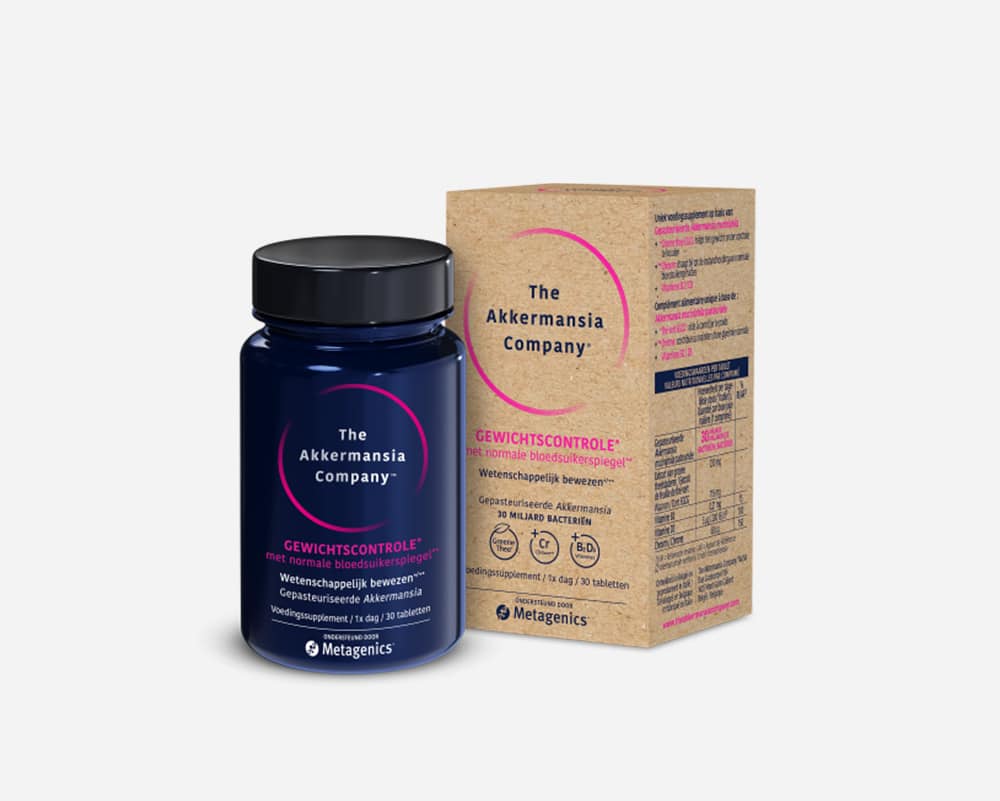 Select options This product has multiple variants. The options may be chosen on the product page
The Akkermansia Company® Weight Control
 30 TabletsFrom: € 59,95
 -
 Select options This product has multiple variants. The options may be chosen on the product pageFrom: € 34,95
 -
 Select options This product has multiple variants. The options may be chosen on the product page
The Akkermansia Company® Gut Support
30 tabletsFrom: € 59,95
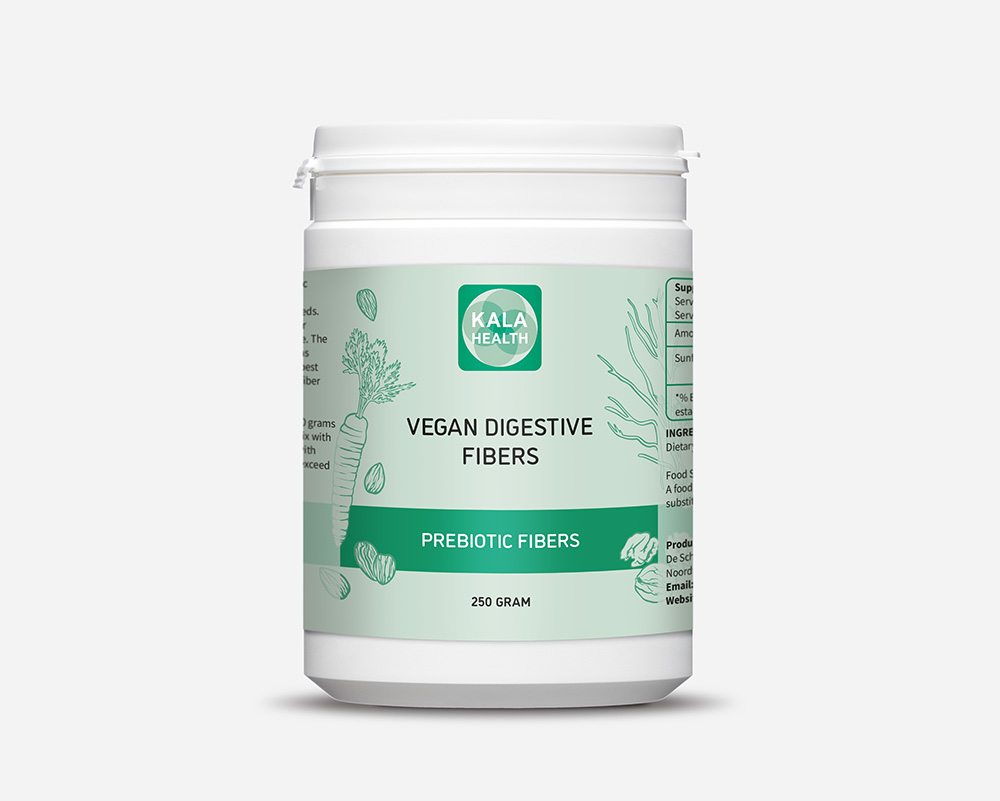
 250 gram powder
FAQ
Natural and safe: MCC is a plant-based substance derived from wood pulp or cotton fibres, essentially purified cellulose, the same substance found in all plant cells. It is recognised as safe by EFSA and FDA and has a long history of use.
Inert: MCC is neither digested nor absorbed. It passes through the body without affecting the active ingredient or other nutrients.
Technically ideal: MCC ensures good flowability during production, uniform distribution of the active ingredient, and stable storage. Alternatives such as maltodextrin or rice flour may contain allergens or have disadvantages that MCC does not.
Minimal quantity: Potential drawbacks of indigestible fibres are only associated with consumption in large quantities in the literature. The amount per capsule is far too small for this.
MCC behaves as an indigestible fibre. In the scientific literature, such fibres are associated with supporting gut function,* but the amount in our capsules is primarily technical and not a functional ingredient.
*Based on general scientific literature; not an EFSA-approved health claim.