 Made in the Netherlands
 Free product of your choice with orders over €75,-




MSM GC, MSM GC Plus and MSM GC Vegan. Three product names that mean very…

What is Coenzyme Q10 and why do so many people choose a Q10 supplement?
What is coenzyme Q10?
Coenzyme Q10 (CoQ10) is found in the mitochondria, where it plays a role in cellular energy metabolism. Q10 shuttles electrons in the respiratory chain; in this way it contributes to the biochemical conversion of nutrients and oxygen into energy (ATP) (Mantle, Heaton, & Hargreaves, 2020). For this reason, CoQ10 is an important nutrient.
Ubiquinone and ubiquinol
Q10 exists in two forms: ubiquinone (oxidized) and ubiquinol (reduced). In the body these forms are continuously converted into each other within the Q-cycle; they work together in the same physiological processes. For energy metabolism there is no fixed “winner”; the balance is determined by the context in the body (Mantle, Dybring, & Hargreaves, 2023).
Why does interest increase over 40?
As we age, Q10 status changes and interest in practical supplementation increases. This is a general trend described in the literature; individual needs may differ (Aaseth, Alexander, Alehagen, & Mosa, 2021).
Q10 in food
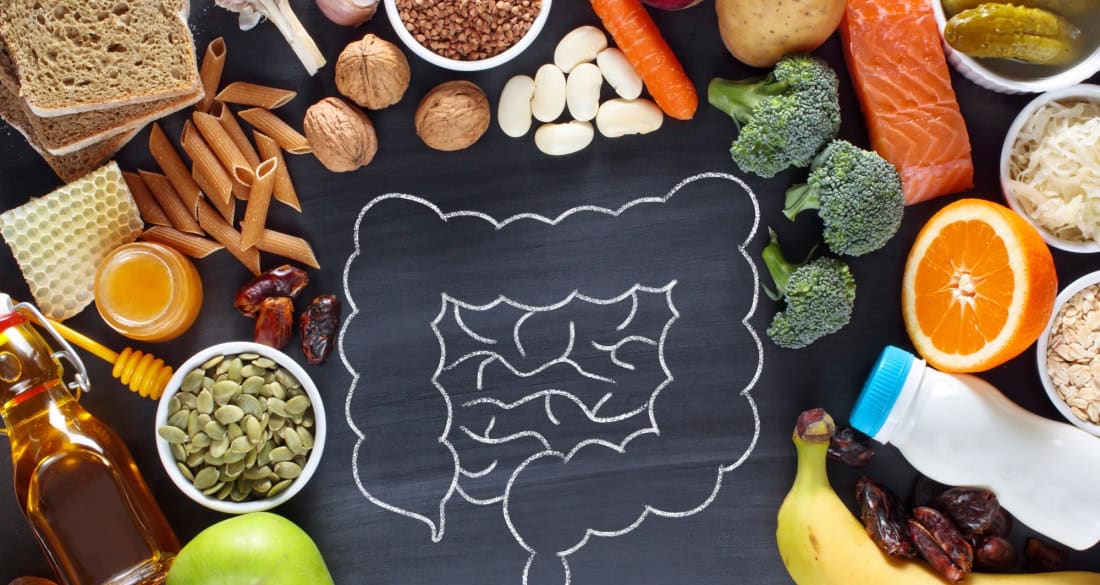
Q10 occurs naturally in food, especially in oily fish (e.g., sardines, mackerel), meat and nuts. Intake from food is usually limited, which is why some people choose a supplement as a practical addition (Mantle et al., 2020).
Supplements: ubiquinol or ubiquinone?
Both forms are utilized by the body. Rather than focusing on the label form, it’s more useful to look at the overall formulation (carrier, solubility, stability) and at transparency on quality. The literature shows that differences in bioavailability often relate to formulation technology and not solely to the form chosen (Mantle et al., 2023).
Formulation and absorption: what should you look for?
Q10 is fat-soluble. That makes the dosage form and carrier decisive for absorption. Studies show that micellar or oil-based preparations improve bioavailability compared to dry powder forms (Zhang, Liu, Chen, & Chen, 2018; Mantle et al., 2020).
How we translate this into our product
- Oil solution in softgel: our Q10 (ubiquinone) is dissolved in vegetable oil. This supports consistent absorption compared with dry powder capsules.
- Stability: ubiquinone is intrinsically stable and therefore suitable for a reproducible formulation; sensitivity to oxidation is minimized.
- Simple dosing schedule: 1 softgel per day is 100 mg. This makes the amount of ubiquinone easy to dose.
- Transparency and testing: batch analyses (COAs) and independent laboratory testing for, among other things, heavy metals and contaminants; we fully communicate ingredients and specifications.
Consumer checklist
- Pay attention to daily dose and batch consistency.
- Check whether Q10 is processed in oil or a micellar matrix (higher absorption potential than dry powders).
- Look for transparent suppliers with COAs and clear specifications.
Safety and use
Coenzyme Q10 is generally well tolerated in the clinical literature. Always follow the recommended dosage on the label. Do you use medication or have specific questions? Consult a physician or pharmacist for personal advice (Aaseth et al., 2021).
Frequently asked questions
What does Q10 do in the body?
Q10 participates in the electron transport chain in the mitochondria and thus supports the conversion of nutrients and oxygen into ATP (Mantle et al., 2020).
Which is better: ubiquinol or ubiquinone?
Both forms occur in the body and are continuously converted into each other. The literature emphasizes that formulation (carrier/technology) is often more decisive for bioavailability than the label form itself (Mantle et al., 2023).
From what age is Q10 useful as a supplement?
Interest often increases from middle age. Whether and when you choose supplementation varies from person to person (Aaseth et al., 2021).
Why do Q10 prices vary so much?
Not every Q10 supplement is the same. You pay for what happens inside the softgel: dose, formulation, stability, purity and testing.
- Daily dose: 30 mg powder is not the same as 100 mg in oil. Always compare the daily dose, not just the capsule.
- Formulation & absorption: Q10 is fat-soluble. Q10 dissolved in oil in a softgel is generally absorbed better than a dry powder capsule. Good formulation costs more but is worthwhile due to higher effectiveness.
- Stability of the form: Ubiquinone is naturally stable. Ubiquinol is more sensitive to oxidation and therefore more difficult (and expensive) to package consistently. You’ll see that reflected in the price.
- Raw material quality & testing: Purity, COAs and independent lab analyses for, among other things, heavy metals and contaminants require investment but give you certainty.
- Transparency vs. marketing: Some brands invest more in reach than in specifications. We invest in raw materials, formulation and testing, and keep the price fair.
- Packaging & logistics: Softgel quality, oxygen and light barriers and short supply chains improve consistency and affect cost price.
What does this mean for you?Our Coenzyme Q10 (100 mg ubiquinone, dissolved in vegetable oil) is a deliberate choice for stable quality and strong value for money.
So, when assessing a Q10 supplement, ask yourself:
- How many mg of Q10 per day?
- Q10 in an oil solution or dry powder?
- COAs and independent testing available?
- Clear ingredients and batch consistency?
Want to know more? Check out our Coenzyme Q10 or call our team for personal advice.
Call us for no-obligation advice
Curious whether our supplements are right for you? Request free advice from our orthomolecular therapist Bente. Call: (+31) (0)70 345-0290.
References
- Aaseth, J., Alexander, J., Alehagen, U., & Mosa, R. (2021). Coenzyme Q10 supplementation—In ageing and disease. Pharmacological Research, 166, 105545. https://doi.org/10.1016/j.phrs.2021.105545
- Mantle, D., Heaton, R. A., & Hargreaves, I. P. (2020). Bioavailability of coenzyme Q10: An overview of the absorption process and subsequent metabolism. Antioxidants, 9(5), 386. https://doi.org/10.3390/antiox9050386
- Mantle, D., Dybring, A., & Hargreaves, I. P. (2023). Coenzyme Q10 metabolism: A review of unresolved issues. International Journal of Molecular Sciences, 24(3), 2585. https://doi.org/10.3390/ijms24032585
- Zhang, Y., Liu, J., Chen, X., & Chen, C.-Y. O. (2018). Ubiquinol is superior to ubiquinone to enhance coenzyme Q10 status in older men: A randomized crossover trial. Food & Function, 9(10), 5653–5659. https://doi.org/10.1039/C8FO00971F
Related Posts