 Made in the Netherlands
 Free product of your choice with orders over €75,-



MSM GC, MSM GC Plus and MSM GC Vegan. Three product names that mean very…
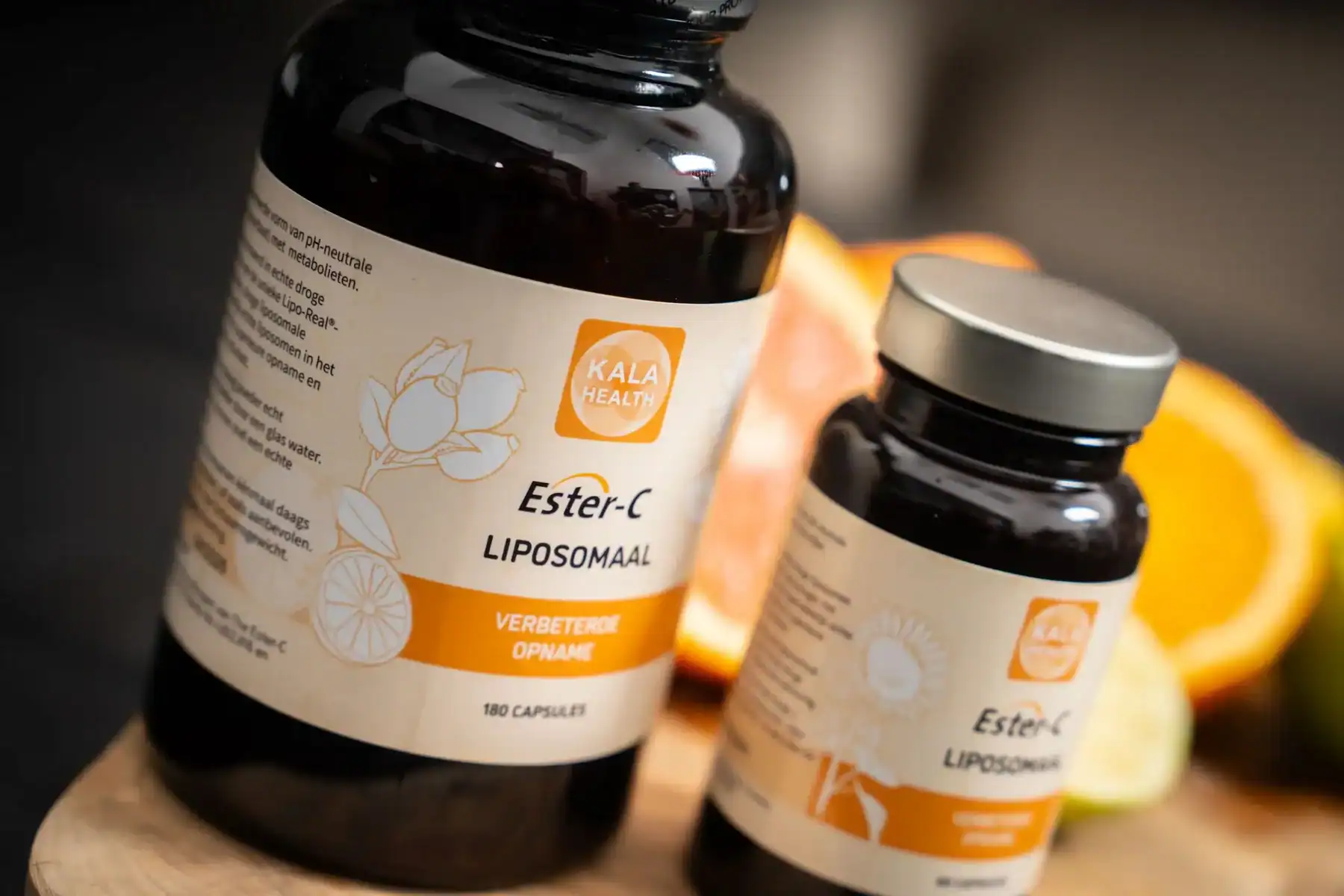
When liposomal supplements don’t add value
Liposomal supplements are booming. They are positioned as technologically advanced and are said to be superior to regular forms. But is liposomal always better?
At Kala Health, we believe that a supplement should only be liposomal if it actually provides additional benefit to the user. In this blog, we explain when liposomal technology does add value, and most importantly, when it does not. We substantiate this with current scientific insights and show why Kala Health makes clear, conscious choices in this regard.
What does liposomal actually mean?
Liposomes are microscopic fat globules that can coat active substances. They protect these substances from degradation in the digestive tract and promote absorption through the intestinal wall. In theory, this increases the bioavailability of a supplement.
But that theory applies only when a substance is difficult to absorb by itself. Is a substance already readily bioavailable in a non-liposomal form? Then liposomal technology adds little.
Want to learn more about the benefits of liposomal supplements? Read our blog about liposomal supplements, and when they really make sense.
When is liposomal really useful?
Liposomal application is especially useful for substances that:
-
dissolve badly in water
-
are rapidly broken down in the gut
-
difficult to get through the cell wall without help
Examples where liposomal formulation improves absorption
| Substance | Reason low absorbability |
|---|---|
| Curcumin | Low water solubility, rapid degradation |
| Q10 (ubiquinone) | Poor absorption, fat soluble |
| PEA | Difficult absorption without fat carrier |
| Astaxanthin | Extremely lipophilic, poor bioavailability |
For these substances, studies show that liposomal administration actually leads to higher blood levels and possibly a stronger physiological response (López-García et al., 2021).
When does liposomal not add anything?
There are many substances that have excellent absorbability by themselves. In such cases, a liposomal form is unnecessary and possibly even detrimental:
Examples where liposomal is unnecessary
| Fabric | Reason |
|---|---|
| Zinc (as bisglycinate) | Is efficiently absorbed in amino acid-bound form |
| Selenium (as L-selenomethionine) | Has naturally high bioavailability |
In these cases, liposomal encapsulation takes up space, meaning less active ingredient fits per capsule. Moreover, it leads to a higher cost without translating into better efficacy.
And what about B vitamins?
B vitamins are generally well absorbed through active transport mechanisms in the intestine. Nevertheless, there are situations in which a liposomal form may be useful, for example, in cases of increased requirement, increased stress, or suboptimal intestinal function.
That is why Kala Health offers a liposomal B-complex in which active forms of B vitamins are combined with liposomal technology for optimal bioavailability in situations where it is desired.
Why Kala Health chooses functional formulations
We develop nutritional supplements based on scientific evidence, and produce them in our own FSSC 22000-certified plant in the Netherlands. Only when a liposomal formulation offers demonstrable benefits to the end user do we apply it.
This way, we guarantee that as a user, you never overpay for something your body doesn’t need.
What does this mean to you?
As a consumer, it is important to remain critical. Look at the content structure of a supplement:
-
What is the bioavailability of the form of the active ingredient used?
-
Is liposomal really necessary with this substance?
-
Do I pay for an improvement, or just the packaging?
Do you have doubts about which supplement is most suitable for you? Feel free to contact us, we are happy to give you honest and substantiated advice.
Conclusion
With poorly absorbable substances such as curcumin, PEA or Q10, on the other hand, liposomal can make a big difference. And in specific situations, such as stress or reduced intestinal function, a liposomal B-complex can be useful.
At Kala Health, we make a conscious distinction in this regard. We use liposomal technology only when science shows it really adds something. That fits with our vision: effective supplements, transparently produced, without unnecessary cost to the consumer.
On health claims and our limits as a brand
Although many of our ingredients have been extensively researched, due to European legislation we are not allowed to mention on this website all the health benefits shown by scientific studies.
Would you like to know more about our products or formulas? We are happy to think along with you without any obligation.
Call us at (+31) (0)70 345-0290
Resources
López-García, G., Martínez-Villaluenga, C., & Peñas, E. (2021). Liposomal delivery systems for nutraceuticals: Recent advances and future trends. Trends in Food Science & Technology, 115, 48-59. https://doi.org/10.1016/j.tifs.2021.05.025
Di Pierro, F., et al. (2019). Enhanced bioavailability of liposomal curcumin: A randomized, double-blind, placebo-controlled study. Journal of Functional Foods, 52, 524-532. https://doi.org/10.1016/j.jff.2018.11.040
Gonzalez, M. J., et al. (2022). The role of liposomes in improving oral bioavailability of poorly water-soluble compounds. International Journal of Nanomedicine, 17, 2211-2228. https://doi.org/10.2147/IJN.S348927
EFSA Panel on Dietetic Products, Nutrition and Allergies (NDA). (2015). Scientific Opinion on the substantiation of health claims related to vitamin C. EFSA Journal, 13(1), 4034. https://doi.org/10.2903/j.efsa.2015.4034
About the author: Jesse
What I value most about my job is that every day I can contribute to promoting products that I fully support. The science and quality behind our nutritional supplements motivate me to make sure as many people as possible get to know them.
I feel at home in a team with a clear vision, that takes responsibility and has a passion for health and well-being.
I have a BSc in Health Sciences from the University of Twente. I combine this background with a master’s degree in marketing, focusing on transparent, substantive communication. No empty claims, but sharing knowledge: building a relationship based on trust and expertise.
Related Posts