 Made in the Netherlands
 Free product of your choice with orders over €75,-




MSM GC, MSM GC Plus and MSM GC Vegan. Three product names that mean very…

Akkermansia muciniphila and butyrate: how two gut mechanisms complement each other
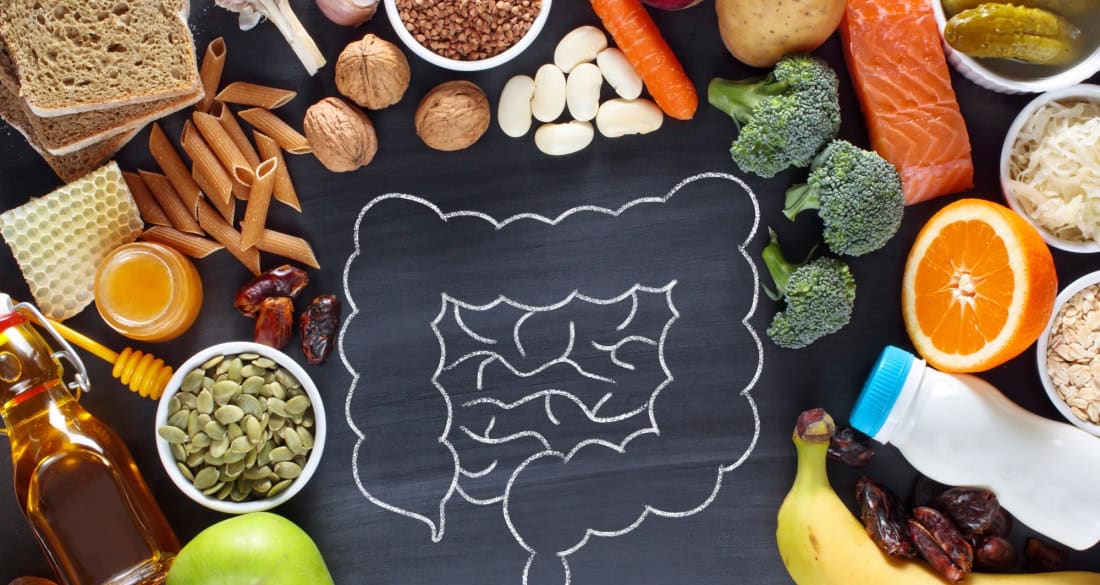
Your gut is an ecosystem, and like any ecosystem it benefits from the right build-up: first a solid base, then refinement. That is the thinking behind combining Akkermansia muciniphila and butyrate. The first is active in the mucus layer of the gut, the second is the energy source for the cells that line the gut wall itself.
In this article you will read how these two mechanisms relate to each other, what the scientific basis is and where it ends, and which products suit which step.
Please note: we are legally not permitted to make health claims about this product. What you read below are the known biological mechanisms of Akkermansia muciniphila and butyrate in the gut, as described in the scientific literature. They are not promises about what these products will do for you. Always consult a doctor in case of health complaints.
What does Akkermansia muciniphila do in the gut?
Akkermansia muciniphila is a bacterial species that occurs naturally in the human gut. In healthy adults it makes up on average 1 to 4 percent of the total gut microbiome. It lives in the mucosal layer, the mucus layer that covers the inside of the gut wall and acts as a first line of defence.
It uses mucin, the protein from which that mucus layer is built, as an energy source, and is at the same time involved in the production of new mucin. In this way it plays a role in the thickness and composition of the mucus layer.
The amount of Akkermansia in the gut is not constant. Levels fall with age and with a diet rich in sugar and saturated fat. Antibiotics have a direct negative effect. A fibre-rich diet and polyphenols, the plant compounds in pomegranate, green tea and dark berries among others, are by contrast associated with higher levels in research.
Would you like to read more about the scientific background of Akkermansia? Read our extensive bckground article.
Not alive, but intact: the role of Amuc_1100
Perhaps the most remarkable thing about pasteurised Akkermansia is that the bacterium is no longer alive, and that this is precisely the point. It is not the live bacterium that is central, but the structure of its outer membrane.
In that outer membrane sits the protein Amuc_1100. What happens during pasteurisation is decisive for the quality of a supplement: the bacterium is inactivated, but the outer membrane and with it the structure of Amuc_1100 remain intact (Plovier et al., 2017). The full scientific background of Amuc_1100, the EFSA assessment and the postbiotic classification can be read in our background article on the science behind Akkermasia. Here we look at what that means for the raw material.
With pasteurised Akkermansia it is not about a live bacterium, but about an intact structure.
Why no enteric coating and no refrigeration?
An enteric coating, a gastro-resistant layer, is intended to protect live bacteria so that they survive the stomach and reach the large intestine alive. Pasteurised Akkermansia is already inactive; there is nothing to protect from stomach acid. For the same reason no refrigeration is needed, and there is no need to megadose to compensate for a presumed loss in the stomach. Some English-language sources nevertheless recommend an enteric coating for pasteurised Akkermansia, but that reasoning assumes the bacterium is still alive. It is not.
“Not alive, but intact” sounds simple, but it places two opposing demands on the raw material at the same time. The bacterium must be fully inactivated, otherwise it does not meet the EU requirement of fewer than 10 CFU per gram. And the structure of the outer membrane must be preserved. Heat too gently and some of the bacteria survive; heat too hard and the structure is lost. Achieving both at once is technically difficult, and most raw material producers do not manage it.
This is where, for us, the difference lies between demonstrating and asserting. Our raw material is analysed metagenomically at species level (99.84% Akkermansia muciniphila) and externally verified for complete inactivation at four points throughout the process, after inoculation, after fermentation, after centrifugation and after drying: zero colony-forming units, at every measurement point.
With Akkermansia, the difference between brands is not a marketing question but a measurement question.
What is butyrate and how does it work in the gut?
Butyrate is a short-chain fatty acid that is formed when specific gut bacteria ferment dietary fibre. It is the main energy source for the colonocytes, the cells that line the inside of the large intestine.
Known butyrate-producing strains include Faecalibacterium prausnitzii, Roseburia intestinalis and Butyrivibrio fibrisolvens. They thrive with a sufficient supply of fermentable fibre such as inulin, pectin, resistant starch and PHGG (partially hydrolysed guar gum).
Where Akkermansia is active in the mucus layer, butyrate works on the energy supply of the gut wall cells themselves. The two act in different places, and that is precisely why they are interesting in combination.
Two mechanisms that complement each other
Akkermansia and butyrate both work in the gut, but in different places: Akkermansia in the mucus layer, butyrate-producing bacteria in the gut lumen, where they supply fuel to the gut wall cells. The idea of using them in sequence, first the base, then the refinement, follows from this division of roles: a well-functioning mucus layer is expected to create more favourable conditions for butyrate-producing bacteria.
Scientific note
There are as yet no clinical studies that have directly tested this exact sequence and compared it with simultaneous use. The approach is based on the known mechanisms of both substances and the logic that follows from them, not on a proven protocol.
For the EU market there is also a practical point: live Akkermansia, which is sometimes recommended as a second step in American supplement guides, is not permitted in Europe. Our approach is fully aligned with what is available and legal in the EU.
Step 1: pasteurised Akkermansia muciniphila
Akkermansia is permitted in the EU only in pasteurised form, approved as a novel food via Commission Implementing Regulation (EU) 2022/168.
Clinical studies use a dosage of 3×10¹⁰ cells per day, that is 30 billion pasteurised cells. Both the Microbes4U trial (Depommier et al., 2019) and the Mount study (2026) used this dosage, in studies of twelve and twenty-four weeks respectively.
Akkermansia Capsules — Kala Health
30 billion pasteurised Akkermansia muciniphila cells per capsule. Own production in the Netherlands, metagenomically analysed raw material (99.84% purity), externally verified for complete inactivation.
Step 2: butyrate support
In the second step the focus shifts to butyrate. This is possible in two ways: through direct supplementation with butyrate, or through prebiotic fibres that serve as a substrate for the butyrate-producing strains already present in your gut. Our Probiotics Capsules contain, alongside ten live strains, inulin as a substrate and L-glutamine.
Butyrate Formula — Kala Health
Direct butyrate support as an addition in the second step. Fully produced in the Netherlands.
Fibre and digestive comfort
Inulin is a commonly used prebiotic, but those not accustomed to a lot of fibre may experience bloating or flatulence with a rapid increase. This is not a sign that something is going wrong; it is a by-product of the fermentation process in which gut bacteria break down the fibre. For those sensitive to this, PHGG can be a gentler alternative: a soluble fibre that is fermented more slowly and evenly. In laboratory research, inulin produced significantly more gas during fermentation than PHGG (Noack et al., 2013). In all cases, start low and build up slowly.
Our Plant Fibres consist of 100% PHGG and are therefore a suitable option for a more sensitive digestive system. Combined use of pasteurised Akkermansia and live probiotic strains is without objection: because pasteurised Akkermansia contains no live bacteria, there are no known interactions.
Probiotics Capsules — Kala Health
25 billion live bacteria in ten strains, supplemented with inulin and L-glutamine. Fully produced in the Netherlands.
Plant Fibres — Kala Health
100% PHGG, a soluble dietary fibre that serves as a substrate for the bacteria in your large intestine. Suitable for those with a more sensitive digestion who still want to increase their fibre intake. Fully produced in the Netherlands.
Live versus pasteurised Akkermansia muciniphila
The difference between live and pasteurised Akkermansia is often misunderstood in practice. Live Akkermansia is permitted as a food supplement in the US, but not in the EU. Pasteurised Akkermansia is approved in the EU by EFSA (Regulation (EU) 2022/168): the outer membrane and the structure of Amuc_1100 are preserved after pasteurisation, it is stable at room temperature and contains no live bacteria.
The common mistake that pasteurised Akkermansia needs an enteric coating to survive the stomach assumes that the bacteria are still alive. They are not: with the pasteurised form, only the structure matters, not viability.
Practical recommendations
Step 1 (months 1 to 3). Akkermansia Capsules, 1 capsule per day (30 billion pasteurised cells), preferably on an empty stomach, in the morning or evening. Refrigeration is not needed; store in a dry place out of direct sunlight. Clinical studies use a minimum of twelve weeks, so evaluate after three months.
Step 2 (as an addition, from month 3). Butyrate Formula for direct butyrate support, or Plant Fibres (PHGG) as a substrate for the butyrate-producing strains already present in your gut. Start low and build up slowly.
Diet as support. A fibre-rich diet with inulin, pectin and resistant starch supports the activity of butyrate-producing strains. Polyphenols from pomegranate, green tea and blueberries are associated with higher levels of Akkermansia in the gut in research.
Frequently asked questions
Can I take Akkermansia muciniphila and butyrate at the same time?
Yes. There are no known interactions between pasteurised Akkermansia muciniphila and butyrate or butyrate-supporting supplements.
Does pasteurised Akkermansia muciniphila need an enteric coating?
No. An enteric coating is relevant for live bacteria. Pasteurised Akkermansia muciniphila is already inactive, so there is nothing to protect from stomach acid. The structure of Amuc_1100 does not need this protection.
Can I use Akkermansia muciniphila alongside GLP-1 medication such as Ozempic?
GLP-1 receptor agonists such as semaglutide, known under brand names such as Ozempic and Wegovy, are prescription medicines. Whether, when and how you also do something with your diet or gut microbiome is a medical consideration that belongs with your doctor. We are not doctors and make no claims about the use of our products alongside this medication. The gut microbiome and metabolism is an active field of research, but the causal relationships have not yet been clarified. If you use GLP-1 medication and want to support your gut microbiome, discuss this with your doctor.
Why can I buy live Akkermansia muciniphila in the US but not in the EU?
In the US, food supplements are subject to different legislation than in the EU. Manufacturers there may bring new ingredients to market without prior approval, unless the authorities intervene. In the EU it works the other way around: new food ingredients may only enter the market once they are explicitly approved. EFSA has approved only pasteurised Akkermansia muciniphila as a safe novel food (Regulation (EU) 2022/168); the structure of Amuc_1100 is preserved in the process. Live Akkermansia muciniphila has not received this approval.
What is the difference between a probiotic and a postbiotic?
A probiotic contains live bacteria. A postbiotic is a non-living bacterial product or component thereof. Pasteurised Akkermansia muciniphila falls, in line with the consensus definition of the ISAPP (2021), under the definition of a postbiotic. Legally it falls into the novel food category in the EU.
May I use this product if I already take a probiotic?
Yes. Pasteurised Akkermansia muciniphila is inactive and contains no live bacteria that could compete with probiotic strains. The combination is without objection. In case of doubt or when taking medication, always consult your doctor.
Are you allowed to say that this product is healthy?
No, and that is deliberate. In the EU, we as a producer may not make health claims that have not been approved by EFSA. The EFSA approval for pasteurised Akkermansia muciniphila concerns only the safety status as a novel food, not specific health effects. What we describe in our content are the known biological mechanisms of Akkermansia muciniphila and butyrate, as described in the scientific literature. For personal advice we always refer to a doctor.
Sources
- Commission Implementing Regulation (EU) 2022/168. Official Journal of the European Union, L 28, 9.2.2022, pp. 5–9.
- Depommier, C., Everard, A., Druart, C., et al. (2019). Supplementation with Akkermansia muciniphila in overweight and obese human volunteers: A proof-of-concept exploratory study. Nature Medicine, 25(7), 1096–1103.
- EFSA NDA Panel (2021). Safety of pasteurised Akkermansia muciniphila as a novel food. EFSA Journal, 19(9), 6780.
- Mount, S., Canfora, E.E., Jocken, J.W., et al. (2026). Pasteurized Akkermansia muciniphila MucT for weight loss maintenance in people with overweight and obesity: a controlled randomized trial. Nature Medicine.
- Noack, J., Timm, D., Hospattankar, A., & Slavin, J. (2013). Fermentation profiles of wheat dextrin, inulin and partially hydrolyzed guar gum using an in vitro digestion pretreatment and in vitro batch fermentation system model. Nutrients, 5(5), 1500–1510.
- Plovier, H., Everard, A., Druart, C., et al. (2017). A purified membrane protein from Akkermansia muciniphila or the pasteurized bacterium improves metabolism in obese and diabetic mice. Nature Medicine, 23(1), 107–113.
- Salminen, S., et al. (2021). The International Scientific Association of Probiotics and Prebiotics (ISAPP) consensus statement on the definition and scope of postbiotics. Nature Reviews Gastroenterology & Hepatology, 18, 649–667.
Questions about Akkermansia or butyrate?
Would you like to know more or do you have questions about your own situation? Our team of nutrition specialists and therapists will be glad to think along with you. Call us on (+31) 070 345 0290 or email info@kalahealth.eu.
A food supplement is not a substitute for a varied, balanced diet and a healthy lifestyle. Consult a qualified professional in case of pregnancy, breastfeeding, use of medication or illness. For legal reasons, we may not publish all information about the effects of this food supplement.
Related Posts