
 Made in the Netherlands
 Free product of your choice with orders over €75,-




MSM GC, MSM GC Plus and MSM GC Vegan. Three product names that mean very…
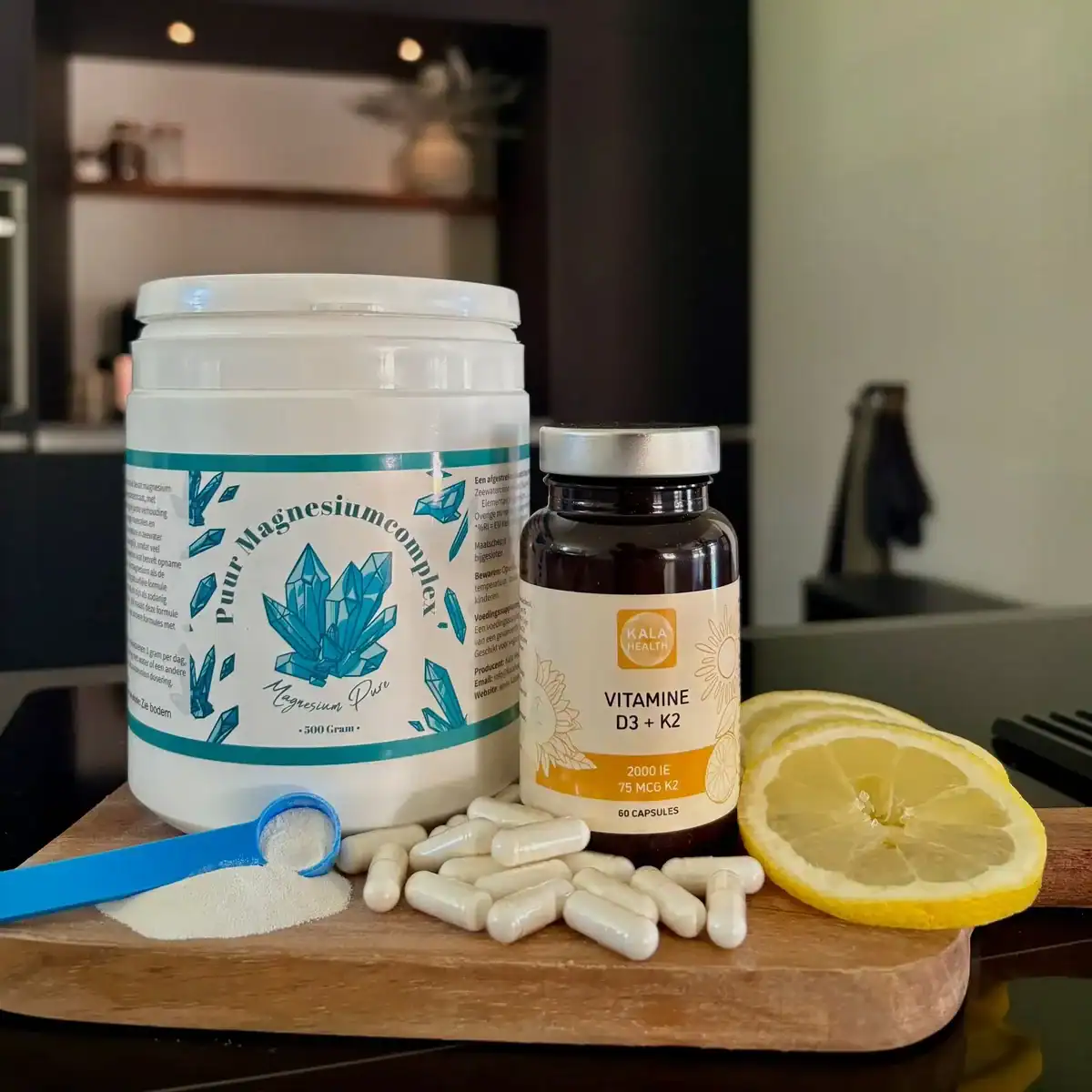
What should you look for when buying supplements? A buying guide with 10 checks
An educated buying guide
The range of supplements is greater than ever. But how do you know which product really contributes to your health, and which is just a well-packaged marketing story? This blog helps you recognize, step by step, what to look for when buying supplements. From ingredients and dosage to labels and scientific evidence, we explain what matters. So that you, the consumer, can make an informed choice for your health.
Table of contents
- Why use supplements?
- What is a good supplement?
- Difference between natural and synthetic forms
- Why the shape of a substance matters
- How do you recognize quality on the label?
- What does science say about absorbability?
- Are excipients a problem?
- How transparent is the producer?
- What does price say about quality?
- Checklist: this is how to choose a supplement that works
1 | Why use supplements?
More and more people are taking supplements to supplement deficiencies, support resistance or promote vitality. But is it really necessary?
- Dietary micronutrient intake has declined since 1970 due to intensive agriculture (Bird et al., 2023).
- The Healthy Lifestyle Monitor survey shows that 42% of Dutch people use at least one supplement per day (Multiscope, 2022).
- Women over the age of 35 in particular structurally use extra vitamin D, magnesium and omega-3 fatty acids.
Practical: Supplements are not a replacement for a healthy diet, but can supplement deficiencies where needed. Think vitamin D in winter, magnesium in intense sports or B12 in veganism.
2 | What is a good supplement?
Cheap is often expensive. Many cheap supplements contain low-quality synthetic substances with no proof of efficacy or control of contamination.
- Choose supplements with scientifically studied forms (such as methylfolate instead of folic acid).
- See if the producer tests for heavy metals, pesticides and microbiological safety.
- Avoid unnecessary fillers, flavors or dyes.
Practical: Go for brands that are transparent about their sources and openly share test results. Look out for labels like SKAL, FSSC 22000 or GMP+.
3 | Natural vs synthetic forms
Not all supplements are recognized equally well by the body. Synthetic forms may be less effective.
- Cyanocobalamin (synthetic B12) must first be converted to methylcobalamin, and this does not always succeed efficiently (Green et al., 2010).
- Synthetic vitamin E is less biologically active than the natural form.
- Natural forms are more expensive, but usually more effective.
Practical: Read the label carefully. If the substance is not specified in parentheses, it is often synthetic.
4 | Why the shape of a substance matters
The chemical binding of a vitamin or mineral affects its absorption, tolerability and action.
- Iron bisglycinate is better absorbed than iron fumarate.
- Zinc picolinate is more absorbable than zinc oxide.
- Calcium citrate works better than calcium carbonate, especially with low stomach acid.
Practical: Pay attention not only to quantity, but also to form. ‘Chelated’ substances are often milder and more effective.
5 | How do you recognize quality on the label?
The label is your first point of control.
- Look for active forms in parentheses, such as “vitamin B6 (pyridoxal-5-phosphate).”
- More is not always better: check dosage against the Reference Intake (EFSA, 2022).
- Look critically at unnecessary additives or “fabric filler.”
Practical: Don’t rely on vague claims. Good brands are transparent about specifications and batches.
6 | What does science say about absorbability?
Not everything you swallow is actually absorbed.
- Meta-analyses (Zhang et al., 2021; Lohner et al., 2017) show that binding forms have great influence on uptake.
- Absorption also depends on age, stomach acid production and intestinal health.
Want to learn more about nutrient bioavailability, and why it’s so important in dietary supplements? Then read our blog on bioavailability.
Practical: Choose supplements with proven bioavailability. Ideally, they are clinically tested.
7 | Are excipients a problem?
Not all adjuvants are bad, but they must be functional.
- Avoid additives such as titanium dioxide, magnesium stearate or artificial sweeteners.
- Sugar-free powders without excipients are often more pure.
- Pay attention to allergens: gluten-free, lactose-free and vegan?
Practical: Less = better. Check whether adjuvants are needed for quality or just for marketing.
8 | How transparent is the producer?
Trust begins with openness.
- Is there independent testing, such as by Eurofins?
- Are origins and COAs shared with clients?
- Is the chain verifiable?
Practical: Choose brands that are willing to prove their quality, and share those proofs with you transparently.
9 | What does price say about quality?
A low price is often an indication of low value.
- Organic ingredients, clinical research and purity cost money.
- Large price differences often come from synthetic fillers.
- Note: How much active dose do you get per jar?
Practical: Always calculate by the price per effective dose, not per capsule, tablet or jar.
10 | Checklist: how to choose a supplement that works
✔️ Check the form of the active ingredient
✔️ Avoid unclear or synthetic fabrics
✔️ Look at independent test results
✔️ Minimize excipients and additives
✔️ Choose brands with transparent communication
✔️ Compare by price per active dose
Resources
-
Bird, J. K., Bruins, M. J., & Turini, M. E. (2023). European Journal of Nutrition, 1-19. https://doi.org/10.1007/s00394-023-03245-2
-
Multiscope. (2022). Healthy Lifestyle Monitor. https://www.multiscope.nl
-
Zhang, Y. et al. (2021). Hypertension Research, 44, 580-590. https://doi.org/10.1038/s41440-021-00606-5
-
Geller, A. I. et al. (2015). NEJM, 373(16), 1531-1540. https://doi.org/10.1056/NEJMsa1504267
-
Dickinson, A. et al (2014). J Am Coll Nutr, 33(2), 176-182. https://doi.org/10.1080/07315724.2013.875423
-
European Food Safety Authority. (2022). EFSA Journal, 20(s1). https://doi.org/10.2903/j.efsa.2022.e200401
-
Green, T. J. et al. (2010). Am J Clin Nutr, 91(1), 1-2. https://doi.org/10.3945/ajcn.2009.28874
-
Lohner, S. et al (2017). Eur J Nutr, 56(1), 405-423. https://doi.org/10.1007/s00394-016-1252-z
On health claims and our limits as a brand
Although many of our ingredients have been extensively researched, due to European legislation we are not allowed to mention on this website all the health benefits shown by scientific studies.
Would you like to know more about our products or formulas? We are happy to think along with you without any obligation.
Call us at (+31) (0)70 345-0290
About the author: Jesse
What I value most about my job is that every day I can contribute to promoting products that I fully support. The science and quality behind our nutritional supplements motivate me to make sure as many people as possible get to know them.
I feel at home in a team with a clear vision, that takes responsibility and has a passion for health and well-being.
I have a BSc in Health Sciences from the University of Twente. I combine this background with a master’s degree in marketing, focusing on transparent, substantive communication. No empty claims, but sharing knowledge: building a relationship based on trust and expertise.
Related Posts