
 Made in the Netherlands
 Free product of your choice with orders over €75,-



MSM GC, MSM GC Plus and MSM GC Vegan. Three product names that mean very…
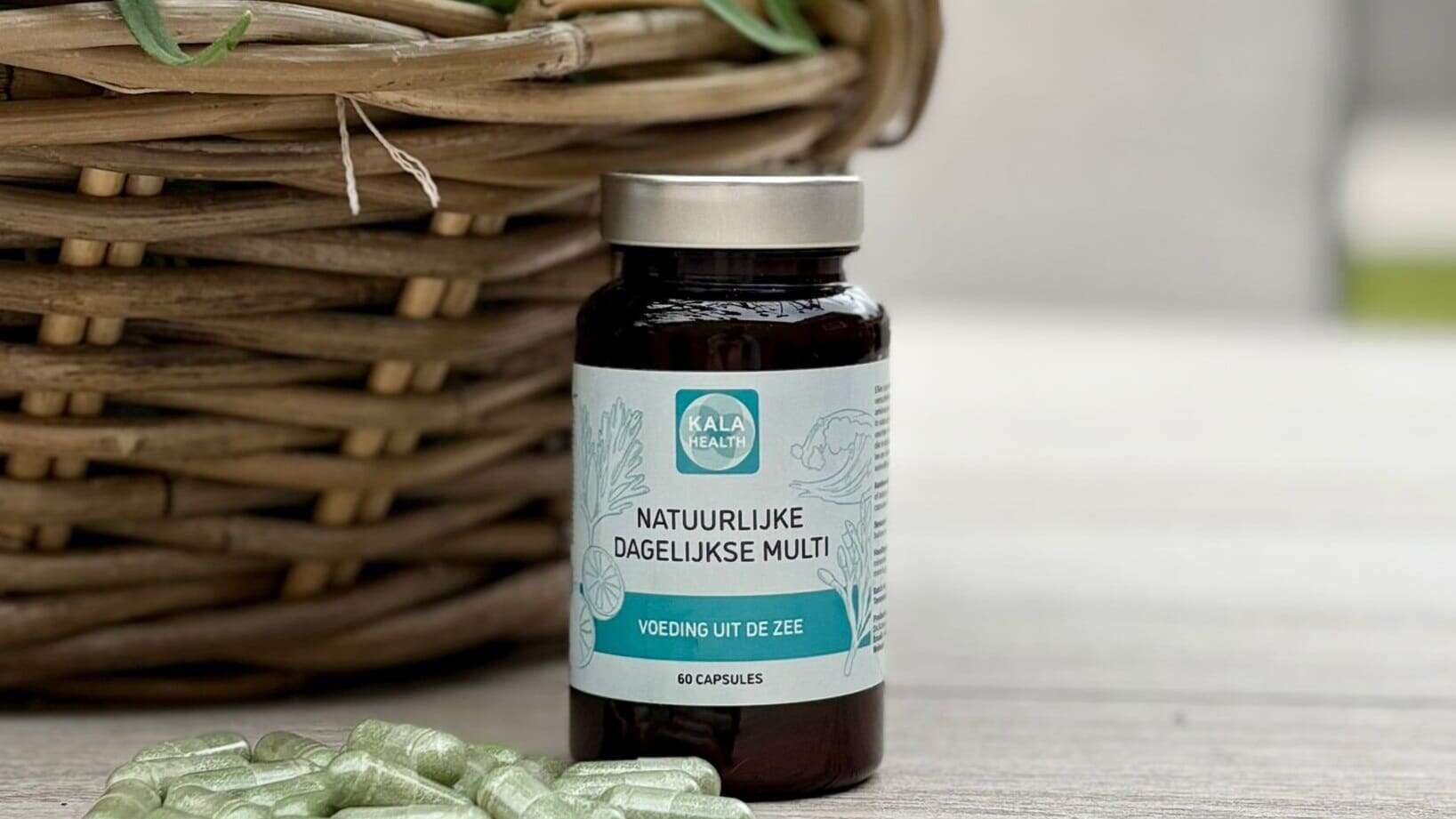
Which multivitamin is best? Our Natural Daily Multivitamin explained
Which multivitamin is the best? How to recognize a really good multivitamin
Choose a natural, properly dosed multivitamin that prioritizes minerals and trace elements and contains the biologically active vitamin forms. That’s exactly how our Natural Daily Multivitamin was developed.
What is a good multivitamin?
A good multivitamin is:
- Complete: contains vitamins, minerals, trace elements and amino acids
- Correctly dosed: around 100% RI per day, not much above it
- Natural: based on algae and seawater, rather than synthetic substances
- Biologically active: active forms such as pyridoxal-5-phosphate (B6), 5-MTHF (folate) and d-α-tocopherol (E)
Overdosing formulas poses risks. For example, EFSA states that long-term use above the Upper Level for vitamin B6 (12 mg/day) can be harmful (EFSA NDA Panel, 2023). For this reason, our Multi contains no more than 100% RI of the A.D.H. for each nutrient.
Comparison: common multivitamin vs. our daily multi
| Feature | Common multivitamin | Kala Health Natural Daily Multi |
|---|---|---|
| Dosage | Often multiple of RI, sometimes risky | 100% RI per capsule – justified daily |
| Form | Synthetic substances (pyridoxine-HCl, folic acid) | Active forms: P-5-P, 5-MTHF, d-α-tocopherol |
| Source | Chemically synthesized | Natural from algae and seawater concentrate |
| Completeness | Mostly limited to vitamins/minerals | Includes amino acids and omega fatty acids |

What’s in multivitamin?
Our formula includes:
- Vitamins: A, B-complex (incl. active forms), C, D3, E (d-α-tocopherol), K1 & K2, folate (5-MTHF), biotin
- Minerals: magnesium, zinc, selenium, calcium, iodine, copper and trace elements
- Amino acids: lysine, leucine, tryptophan, carnitine, among others
- Fatty acids: omega-3, -6, -7 and -9 from algae
What is multivitamin good for?
- Immune system: A, B12, C and D contribute to normal function
- Energy: B vitamins, C and biotin help release energy from food
- Fatigue: B5, B12, C and magnesium reduce fatigue
- Bones and muscles: D, K and magnesium support skeletal and muscle function
- Protection cells: C and E protect against oxidative stress
What does a multivitamin do to your body?
A multivitamin supplements deficiencies and supports normal body functions. Large-scale reviews (Mangione et al., 2022; O’Connor et al., 2022) show no prevention of cancer or heart disease in the general population. However, benefits have been found for specific groups such as the elderly (Baker et al., 2023; Vyas et al., 2024).
What is the best multivitamin for the elderly?
In 60+, the need for B12, D and magnesium increases. RCTs such as COSMOS-Mind show cognitive benefits of a daily multivitamin in the elderly (Baker et al., 2023; Vyas et al., 2024). Our formula contains these nutrients in active forms and safe doses.
Which multivitamin for woman & child?
Woman
Important for women include folate (5-MTHF), essential during pregnancy. Low folate status is a risk factor for neural tube defects (Samaniego-Vaesken et al., 2024).
Child
Our formula can be used from 1 year of age, adjusted according to body weight. Not suitable under 1 year of age.
When to take multivitamin?
Preferably take during a meal for optimal absorption of fat-soluble vitamins. Choose a set time, e.g. breakfast.
Why our multivitamin stands out
- Correctly dosed, around 100% RI per capsule
- Natural foundation (algae and sea water)
- Active forms (B6 as P-5-P, folate as 5-MTHF, E as d-α-tocopherol, K2 as MK-7)
- Vegan, free of excipients
- Transparent: batch COAs available
FAQ
Is it wise to take multivitamin every day?
Yes, provided it is a properly dosed formula. Daily use of a balanced multi can supplement deficiencies.
What does a multivitamin do to your body?
It supports energy, immune system, bones and muscles, but is not a substitute for a healthy lifestyle.
Resources
- Mangione, C. M., Barry, M. J., Nicholson, W. K., Cabana, M., Caughey, A. B., Davis, E. M., … Silverstein, M. (2022). Vitamin, mineral, and multivitamin supplementation to prevent cardiovascular disease and cancer: US Preventive Services Task Force recommendation statement. JAMA, 327(23), 2326-2333. https://doi.org/10.1001/jama.2022.8970
- O’Connor, E. A., Evans, C. V., Ivlev, I., Rushkin, M. C., Thomas, R. G., Martin, A., … Whitlock, E. P. (2022). Vitamin and mineral supplements for the primary prevention of cardiovascular disease and cancer: Systematic review. JAMA, 327(23), 2334-2347. https://doi.org/10.1001/jama.2021.15650
- Loftfield, E., O’Connell, C. P., Abnet, C. C., Freedman, N. D., & Huang, C. (2024). Multivitamin use and mortality risk in 3 prospective US cohorts. JAMA Network Open, 7(6), e2418729. https://doi.org/10.1001/jamanetworkopen.2024.18729
- Baker, L. D., Manson, J. E., Rapp, S. R., et al. (2023). Effects of cocoa extract and a multivitamin on cognitive function: COSMOS-Mind. Alzheimer’s & Dementia, 19(4), 1308-1319. https://doi.org/10.1002/alz.12767
- Vyas, C. M., Manson, J. E., Sesso, H. D., Cook, N. R., Rist, P. M., Weinberg, A., … Okereke, O. I. (2024). Effect of multivitamin-mineral supplementation on cognitive function: COSMOS clinic subcohort & meta-analysis. American Journal of Clinical Nutrition, 119(3), 692-701. https://doi.org/10.1016/j.ajcnut.2023.12.011
- Fantacone, M. L., Lowry, M. B., Uesugi, S. L., Michels, A. J., Choi, J., Leonard, S. W., … Gombart, A.. F. (2020). The effect of a multivitamin and mineral supplement on immune function in healthy older adults: RCT. Nutrients, 12(8), 2447. https://doi.org/10.3390/nu12082447
- EFSA NDA Panel. (2023). Scientific opinion on the tolerable upper intake level for vitamin B6. EFSA Journal, 21(5), e08006. https://doi.org/10.2903/j.efsa.2023.8006
- European Commission. (s.d.). EU Register of Nutrition and Health Claims. https://food.ec.europa.eu/food-safety/labelling-and-nutrition/nutrition-and-health-claims/eu-register-health-claims_en
- NIH ODS. (2021). Vitamin E – Health Professional Fact Sheet. https://ods.od.nih.gov/factsheets/VitaminE-HealthProfessional/
- NIH ODS. (2025). Vitamin D – Health Professional FAct Sheet. https://ods.od.nih.gov/factsheets/VitaminD-HealthProfessional/
Related Posts